This Content Is Only For Subscribers
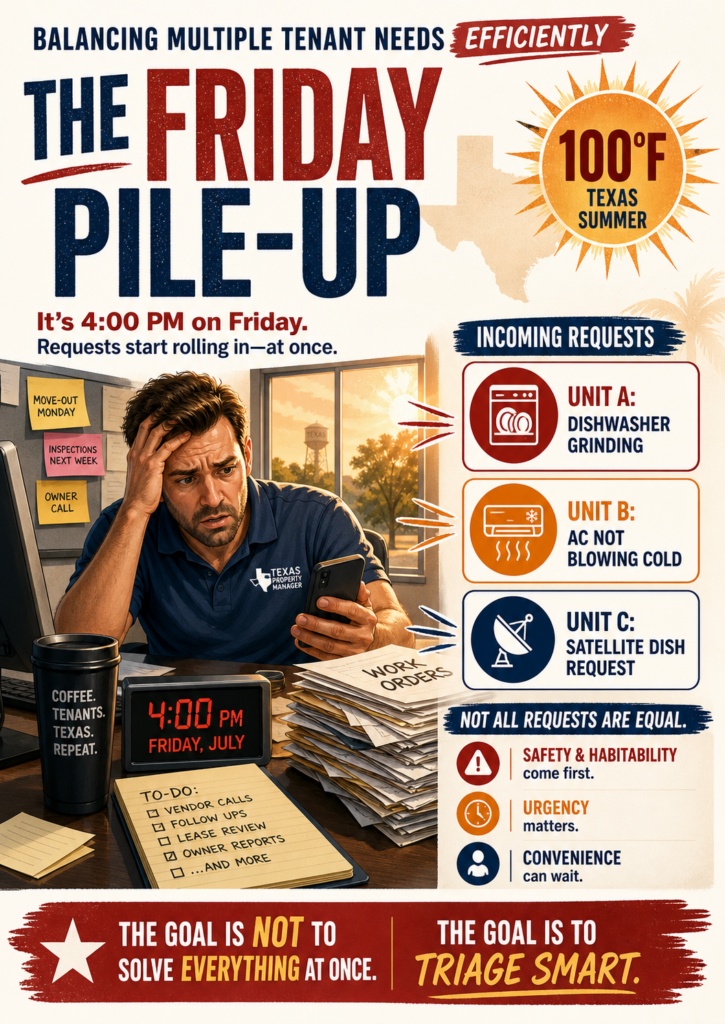
There is a specific kind of stress that only a property manager understands. It usually hits around 4:00 PM on a Friday in July. You get a text from the tenant in Unit A complaining that the dishwasher is making a weird grinding noise. As you are typing a reply, your phone rings—it is the tenant in Unit B, panicked because the AC just stopped blowing cold air. Before you can even hang up, an email drops in from the new tenant in Unit C asking if they can install a satellite dish on the roof.
I call this the “Friday Pile-Up,” and if you don’t have a system for balancing these competing needs, you are going to spend your entire weekend putting out fires. Over the years, I have learned that you cannot treat every tenant request with the same level of urgency, even if the tenant feels their issue is the end of the world. Here is how I balance multiple needs without losing my mind.
The Art of the “Acknowledge and Defer”
When three tenants need something at the exact same time, your first instinct is usually to try and solve all three problems immediately. This is a mistake. Your actual first step should simply be to stop the bleeding by acknowledging the request.
When the tenant in Unit C emails about the satellite dish, I don’t spend twenty minutes digging through the HOA bylaws right then. I send a quick, templated reply: “Hi Mark, I received your question about the satellite dish. I need to review the HOA guidelines on this, but I will get back to you with an answer by Tuesday afternoon.”
I call this the “Acknowledge and Defer” strategy. You have validated the tenant by responding quickly, but you have firmly deferred the actual work to a time that suits your schedule. This clears the mental space you need to deal with the actual emergency.
Redefining “Urgent” for Your Tenants
The hardest part of balancing multiple needs is that every tenant believes their specific problem is the most urgent issue on your plate. To the tenant in Unit A, that grinding dishwasher is a crisis. To me, sitting in a 100-degree Texas summer, it is barely a blip on the radar compared to Unit B’s broken AC.
You have to be the one who defines what “urgent” means. I do this during the move-in orientation, but I also reinforce it during the summer rush. When Unit A texts about the dishwasher, my response is polite but firm: “I am sorry the dishwasher is acting up! I have logged the work order. Because we are in the middle of a summer heatwave, my appliance vendor is currently prioritizing emergency refrigeration calls, so it may be a few days before he can get out there. I will keep you updated.”
You are managing their expectations by pulling back the curtain slightly. Most reasonable people understand that a broken AC in July trumps a noisy dishwasher, but you have to explicitly tell them that is why they are waiting.
The “Vendor Day” Strategy
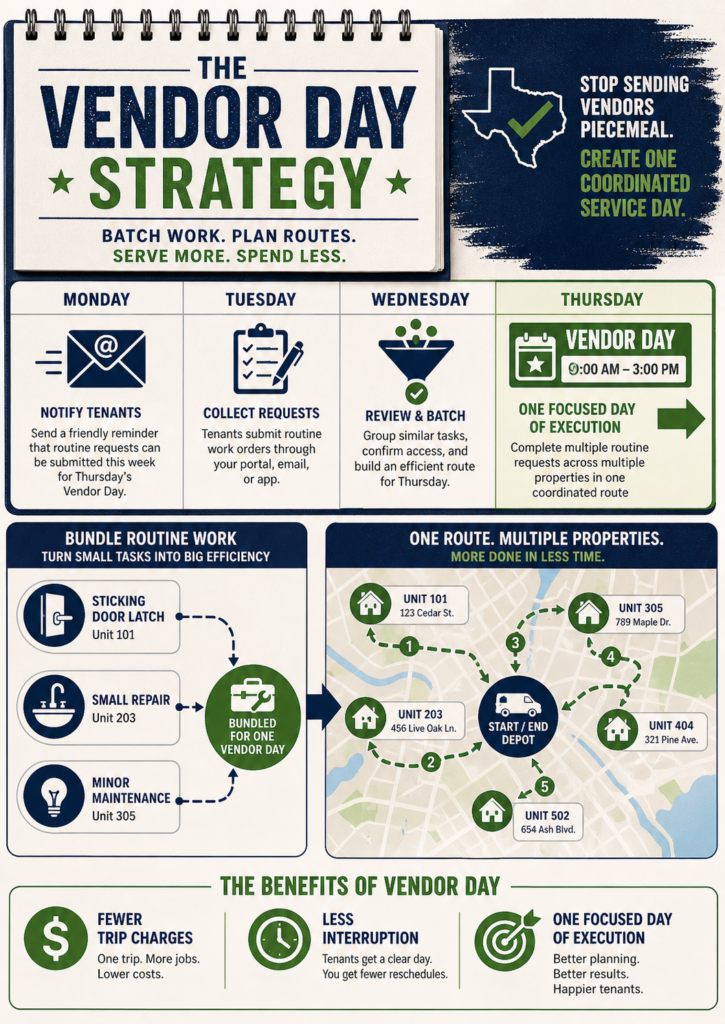
When you have multiple minor requests scattered across different properties, the most inefficient thing you can do is dispatch vendors piecemeal. If you send a handyman to Unit A on Monday, Unit C on Wednesday, and Unit D on Friday, you are wasting time and racking up trip charges.
Instead, I use what I call the “Vendor Day” strategy. I let routine, non-urgent requests pile up for a week or two. Then, I schedule my handyman for a single full-day block on a Thursday.
I email all the affected tenants on Monday: “Hi everyone, our maintenance tech will be onsite this Thursday between 9:00 AM and 3:00 PM to knock out several routine work orders, including your sticking door latch. You do not need to be home.”
By batching the needs of multiple tenants into a single, highly coordinated day, you turn a week of scattered interruptions into one focused day of execution.
Protecting Your Own Oxygen Mask
Finally, balancing tenant needs requires you to balance your own needs first. If you are burned out, exhausted, and resentful of your phone ringing, you cannot be an effective property manager.
When the Friday Pile-Up happens, I handle the true emergency (the AC in Unit B), I acknowledge and defer the non-emergencies, and then I turn my phone on “Do Not Disturb” and go eat dinner with my family. The dishwasher will still be broken on Monday morning, and that is perfectly okay. You have to put your own oxygen mask on first before you can help anyone else.