This Content Is Only For Subscribers
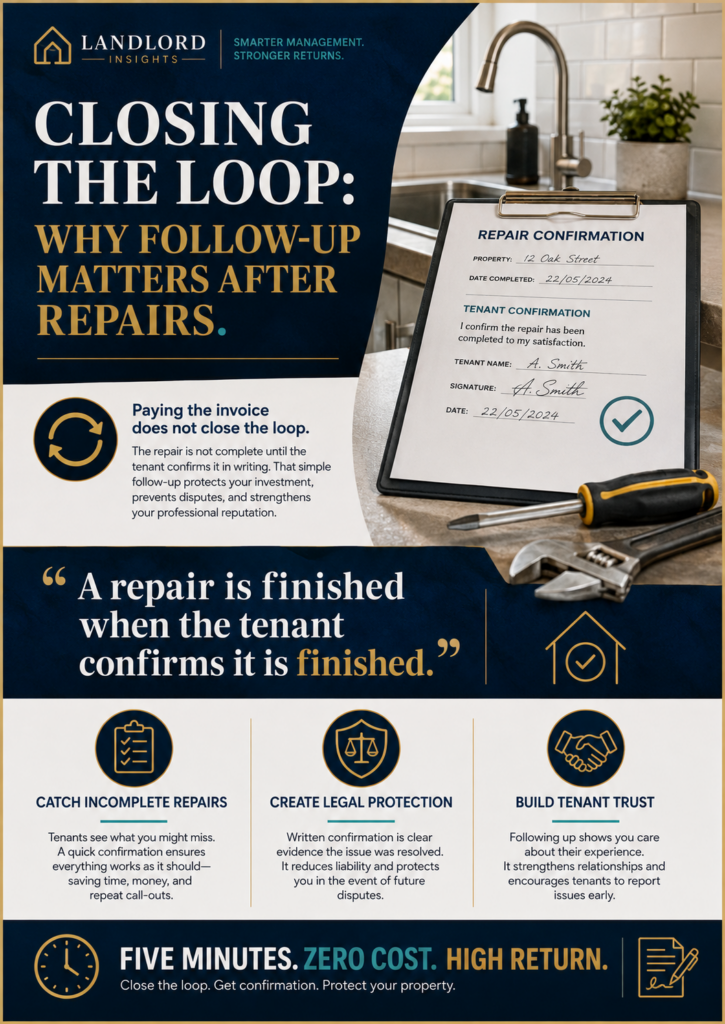
Most landlords treat a repair as finished the moment the vendor sends the invoice. The plumber fixed the leak, the invoice arrived, you paid it, and the matter is closed. This is one of the most common and most costly assumptions in small portfolio management. The repair is not finished when the vendor leaves. It is finished when the tenant confirms it is finished and that confirmation is documented in writing.
The follow-up after a completed repair is the step that separates landlords who manage their properties from landlords who are managed by them. It takes less than five minutes, costs nothing, and accomplishes more for your legal protection and your tenant relationships than almost any other single action in the maintenance process.
What Can Go Wrong After a Vendor Leaves
Vendors make mistakes. They fix the wrong thing, they use the wrong part, or they address the symptom without identifying the underlying cause. A plumber who clears a slow drain by snaking the line may have solved the immediate blockage without discovering the root intrusion that caused it. An appliance technician who replaces a refrigerator thermostat may have missed the failing compressor that was the actual source of the problem. Without a follow-up to the tenant, these incomplete repairs go undetected until the problem resurfaces, often in a worse state than before.
There is also the issue of vendor accountability. When you pay an invoice without verifying the work, you have no leverage if the repair fails within days. A follow-up that produces a written tenant confirmation of the completed work creates a clear record of when the repair was accepted as satisfactory. If the same issue recurs two weeks later, that record is your basis for calling the vendor back at no additional charge.
The Follow-Up Message
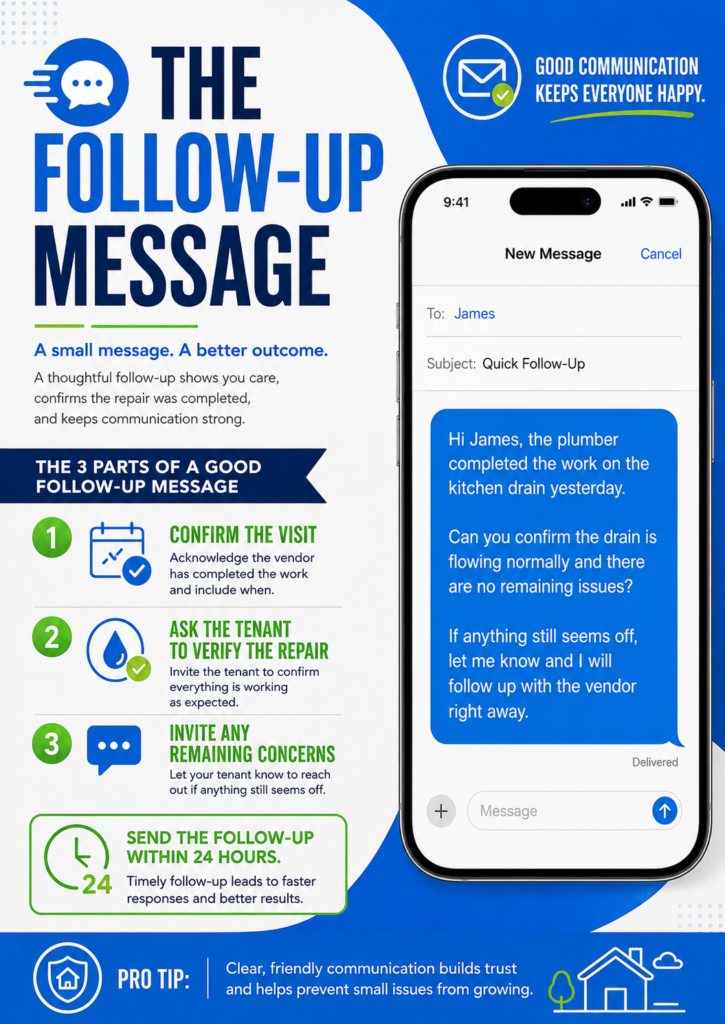
The follow-up message should be sent within twenty-four hours of the vendor’s visit. It does not need to be formal or lengthy. It needs to accomplish three things: confirm that the vendor completed the visit, ask the tenant to verify the repair is working properly, and invite the tenant to report any remaining concerns.
A straightforward message works well: “Hi James, the plumber completed the work on the kitchen drain yesterday. Can you please confirm that the drain is flowing normally and there are no remaining issues? If anything still seems off, just let me know and I will follow up with the vendor right away.”
This message takes thirty seconds to write. The tenant’s response, whether it is a simple confirmation or a report of a remaining issue, becomes part of the maintenance record for that property. If the tenant confirms the repair is complete, that confirmation is your documentation that the issue was resolved to their satisfaction on a specific date. If the tenant reports a remaining problem, you have discovered it within twenty-four hours rather than three weeks later when the damage has compounded.
The Documentation That Protects You
The legal value of a closed-loop maintenance record is significant for Texas landlords. Under the Texas Property Code, a landlord’s liability for failing to repair a condition is contingent on receiving proper notice and failing to act within a reasonable time. When a tenant later claims that a repair was never properly completed, your maintenance record is your primary defense.
A complete record for a single repair should include the original request with its date stamp, your acknowledgment, the vendor work order, the invoice, and the tenant’s written confirmation that the repair was completed satisfactorily. This chain tells a clear, chronological story that is nearly impossible to dispute in a Justice of the Peace court.
Without the final confirmation from the tenant, that chain has a gap. The invoice proves the vendor was paid. It does not prove the work was done correctly or that the issue was actually resolved. That gap is where disputes live.
The Relationship Value
Beyond the legal protection, the follow-up message sends a signal to your tenant that carries significant long-term value. It tells them that you care about the outcome of their repair, not just the transaction. Most tenants have rented from landlords who disappeared after dispatching a vendor and never checked back in. When you follow up consistently, you distinguish yourself as a landlord who is genuinely invested in the condition of the property and the comfort of the person living in it.
That distinction translates directly into lease renewals. Tenants who feel heard and cared for do not spend their evenings browsing rental listings. They renew. They refer friends. They report small issues before they become large ones because they trust that you will actually respond. The five-minute follow-up message after every completed repair is one of the highest-return habits a small landlord can build.