This Content Is Only For Subscribers
The absolute most dangerous phrase a tenant can ever utter is, “I noticed that a few months ago, but I really did not want to bother you.” That well intentioned hesitation is exactly how a simple fifty dollar plumbing fix quietly transforms into a catastrophic five thousand dollar subfloor replacement. When you are independently managing a small portfolio of rental houses, you simply cannot afford for your tenants to be polite about developing structural failures.
Welcome back to Maintenance Matters. Today, we are tackling the communication gap. Tenants generally do not own real estate, which means they do not view the house through the lens of asset preservation. They view it purely in terms of livability. If a slow drip under the sink is not ruining their shoes, they simply put a bowl under it and forget it exists. You must explicitly train them to see the warning signs that threaten your investment.
The One Page Refrigerator Guide
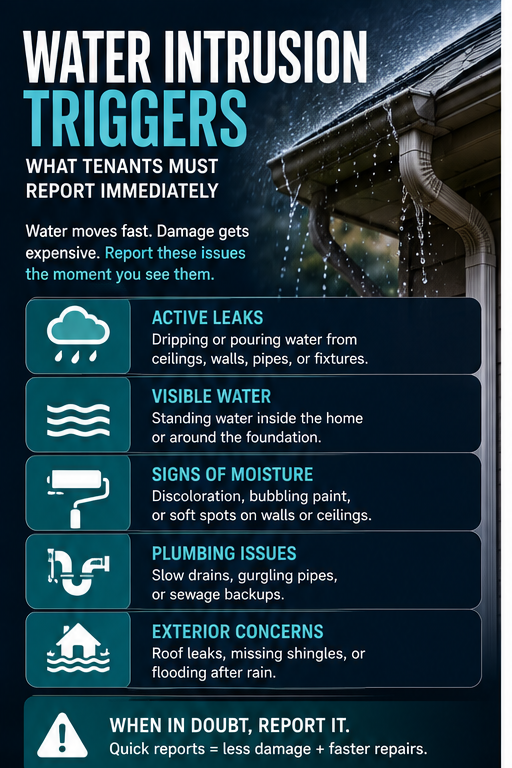
You cannot expect a tenant to memorize a dense paragraph buried on page seven of their lease agreement. You must provide them with a single, highly visible document that clearly outlines exactly what requires an immediate phone call. I recommend a laminated, single page guide that you physically hand to them during the move in walkthrough. Tell them to stick it directly on the refrigerator.
This critical document must be entirely free of confusing legal jargon or lease citations. It needs to be written in plain, direct, conversational English. The ultimate goal is to completely remove all friction, guesswork, and ambiguity from the tenant’s reporting process. You want them to read a bullet point and immediately pick up the phone.
The Water Intrusion Triggers
Water is the primary enemy of any physical structure. Your tenants must be trained to report any sign of un-contained water immediately, regardless of how minor it appears.
The refrigerator guide must explicitly list the following triggers: a toilet that continues to run long after it is flushed, a faucet that drips even when fully closed, and any visible moisture or dampness inside the cabinet under a sink.
More importantly, you must train them to look up. A brown or yellow circular stain appearing on a ceiling is not a cosmetic issue; it is a blaring siren indicating an active roof leak or a compromised plumbing line on the second floor. Tenants often ignore ceiling stains until water physically begins dripping onto their furniture. You must instruct them to call you the moment the discoloration appears.
The Texas Foundation Warning Signs
If you own rental property in Texas, you are already intimately familiar with the dangers of expansive clay soil. Your tenants, however, likely are not. You must enlist them as your early warning system for foundation movement.
Instruct your tenants to call you immediately if exterior doors suddenly begin sticking or rubbing against the frame, or if deadbolts suddenly refuse to align with the strike plate. These are the earliest indicators that the slab is shifting.
Additionally, tell them to report any new, jagged cracks appearing in the drywall, particularly radiating outward from the upper corners of window frames and interior doors. Catching foundation movement early allows you to correct the soil moisture levels before the slab physically fractures.
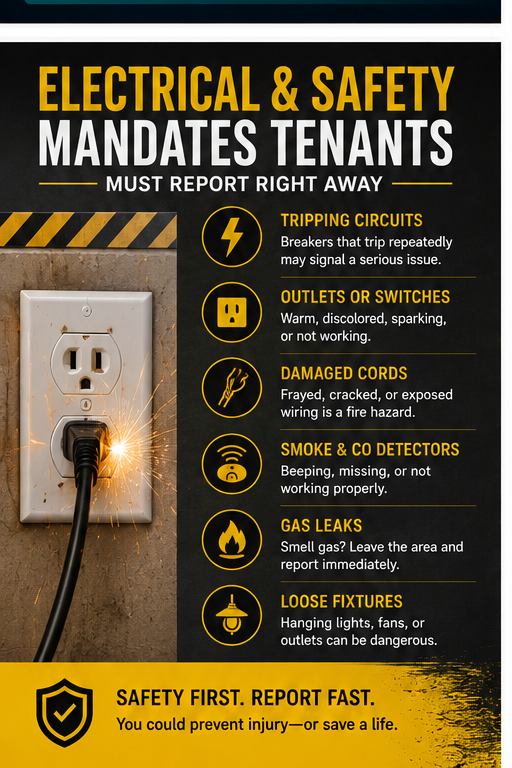
The Electrical and Safety Mandates
Electrical issues are non negotiable life safety threats. The tenant must understand that electrical anomalies are never to be ignored.
The guide must instruct them to call immediately if an outlet sparks when a plug is inserted, if a light switch feels physically warm to the touch, or if they detect the distinct, acrid smell of burning plastic anywhere in the house. Furthermore, if a specific circuit breaker trips repeatedly during normal, everyday use, that is not an inconvenience; it is a sign of a dangerously overloaded circuit that requires a licensed electrician.
Finally, cover the smoke and carbon monoxide detectors. Instruct the tenant to report any unit that chirps, even after they have replaced the battery. A malfunctioning detector is a massive liability that you must cure instantly.
The Framing
When you hand the tenant this guide, your framing is critical. You must explicitly state, “Please bother me.” Tell them directly that you would rather receive ten false alarms about a water leak than miss one actual plumbing failure.
By removing the fear of being a nuisance, and by providing a clear, simple list of exact triggers, you transform your tenant from a passive occupant into an active, valuable partner in preserving your physical asset.