This Content Is Only For Subscribers
A digital filing cabinet is only as useful as its organizational structure. Simply uploading every document, receipt, and photo into a single, massive cloud storage folder creates a digital junk drawer that is nearly impossible to navigate when specific information is needed quickly. For small landlords managing properties in Texas, establishing a standardized folder hierarchy is a foundational step in creating an efficient, resilient business operation. Whether using Google Drive, Dropbox, or OneDrive, the structure should remain consistent across all properties.
The root level of the cloud storage system should be organized by property address. Creating a separate master folder for each property, rather than organizing by document type, ensures that all relevant information for a specific asset is housed in one location. For example, a folder named “123 Main Street – Austin” becomes the central repository for that property. Within each property’s master folder, a standardized set of subfolders should be established to categorize the lifecycle of the investment and the tenancy.
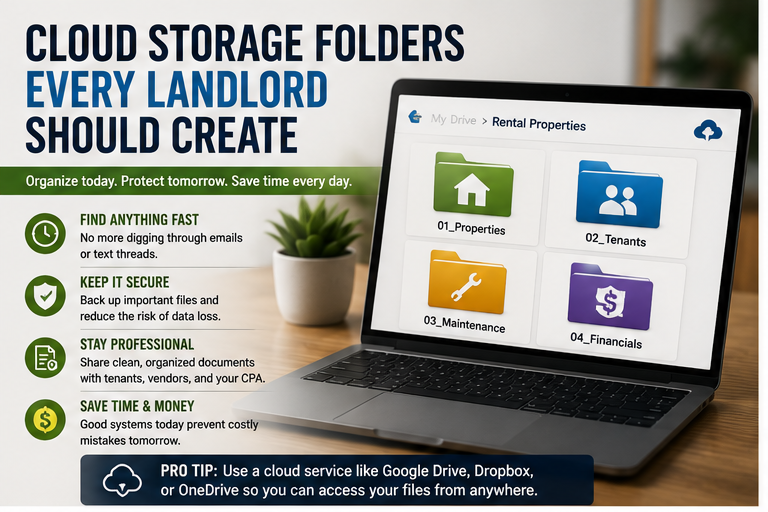
The first essential subfolder is Acquisition and Legal. This folder holds the foundational documents of the property. It should contain the closing documents, the deed, the title insurance policy, and the property survey. Any entity formation documents related specifically to that property, such as an LLC operating agreement, should also reside here. Having these documents readily accessible is crucial for refinancing, selling, or addressing legal disputes regarding property boundaries or ownership.
The second critical subfolder is Property Specs and Maintenance. This folder serves as the operational manual for the house. It should include the manuals and warranty information for all major appliances, the HVAC system, and the water heater. Landlords should also store records of the property’s paint colors, flooring types, and dimensions of key rooms. When a tenant in San Antonio reports a broken refrigerator, the landlord can quickly access the model number and warranty status from this folder without needing to visit the property or ask the tenant to search for the information.
The third subfolder, Financials and Receipts, is vital for tax preparation and tracking the property’s performance. This folder should be organized by year. Within each year, landlords should store property tax statements, insurance policies, and digital copies of all receipts related to repairs, maintenance, and capital improvements. While a dedicated accounting software is recommended for tracking income and expenses, keeping the source documents organized in this folder provides a necessary backup and simplifies the process of providing documentation to an accountant.
The fourth essential subfolder is Tenant Records. This folder must be handled with care, as it contains sensitive personal information. It should include the executed lease agreement, any addendums, the tenant’s application, and their background check results. All correspondence with the tenant, including maintenance requests and notices, should be saved here. When a tenant vacates, this folder should be archived but retained for the period required by law, in case of future disputes over the security deposit or lease terms.
The final necessary subfolder is Property Photos and Inspections. This folder is critical for documenting the condition of the property over time. It should contain comprehensive photo sets from before the tenant moved in and after they moved out. Regular inspection reports, whether conducted by the landlord or a property manager, should also be stored here. These visual records are the primary defense against disputes over security deposit deductions for damages. Photos should be clearly labeled with the date they were taken to establish a clear timeline of the property’s condition.
Establishing this folder structure requires discipline, particularly when handling physical documents. Landlords must commit to scanning or photographing paper receipts and documents immediately and filing them in the appropriate digital location. Relying on a physical inbox to hold documents for later filing often leads to lost records and disorganized files.
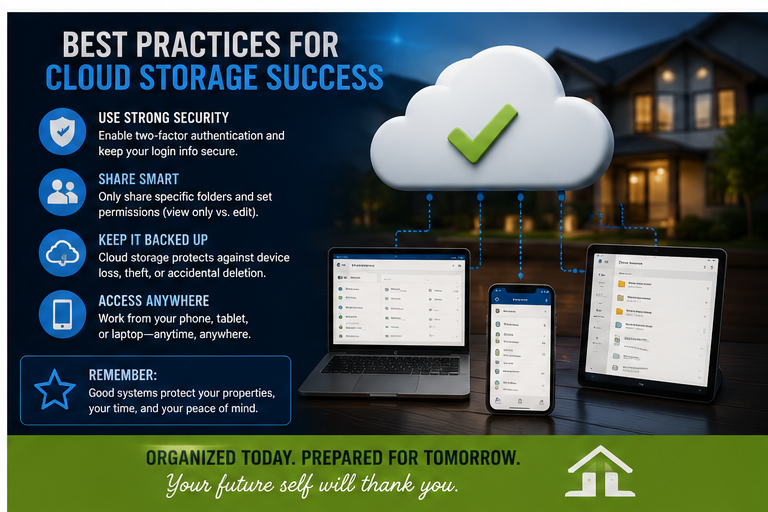
A well-structured cloud storage system transforms property management from a reactive scramble into a proactive, organized process. When an insurance adjuster needs a copy of the roof warranty, or an accountant requests the property tax statement, the landlord can retrieve the document in seconds from any device. This level of organization not only saves time but also projects a level of professionalism that benefits interactions with tenants, contractors, and financial professionals. The investment of time required to set up these folders is minimal compared to the hours saved searching for misplaced documents during a crisis.