This Content Is Only For Subscribers
Ask any property manager what generates the most tenant complaints, and the answer is almost never the repair itself. It is the silence that follows the repair request. A tenant submits a maintenance ticket, hears nothing for three days, and by the time you finally call the plumber, they are already composing a strongly worded email. The repair that should have been a minor inconvenience has become a genuine conflict, not because anything went wrong, but because nobody communicated.
This is one of the most preventable problems in property management, and it costs landlords enormous amounts of goodwill every year. The fix requires no special software, no extra budget, and no additional staff. It requires only a commitment to keeping tenants informed at every stage of the repair process.
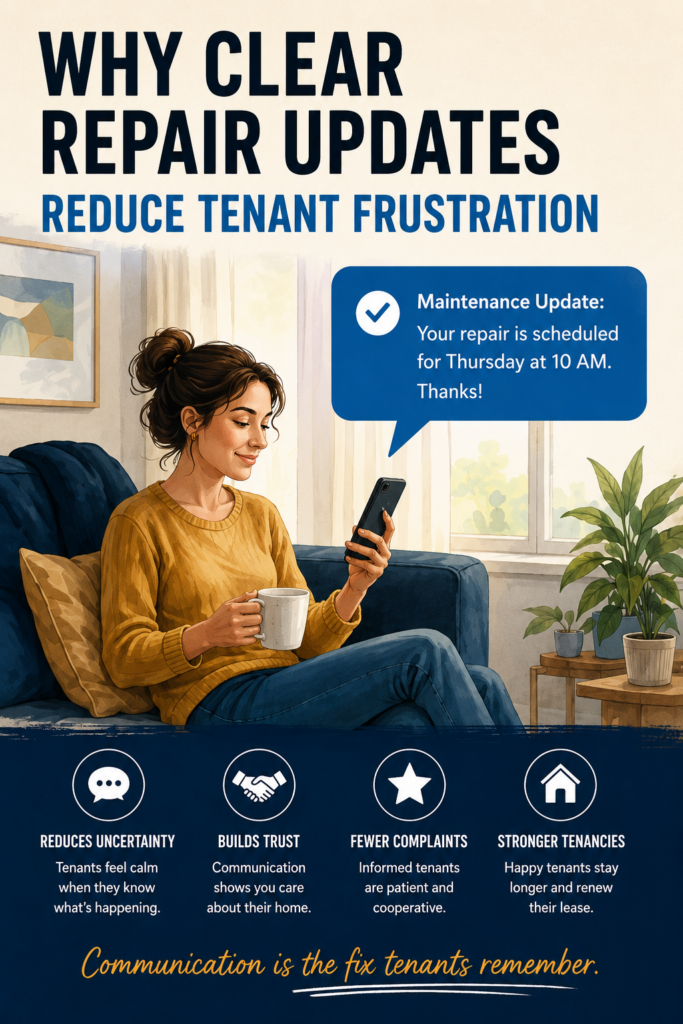
What Tenants Are Actually Asking For
When a tenant submits a maintenance request, they are not just reporting a problem. They are asking an unspoken question: do you care about my home and my comfort? The speed and quality of your communication in the days that follow is your answer.
Tenants are remarkably patient when they feel informed. A tenant who knows the HVAC part is on order and will arrive Thursday is frustrated, but manageable. A tenant who submitted a request four days ago and has heard nothing is convinced they are being ignored. The frustration is not about the broken AC. It is about the uncertainty. They do not know if you received the request or if they are going to be sleeping in a hot house in the middle of a Texas summer indefinitely.
Clear, proactive communication eliminates that uncertainty. It does not fix the AC any faster, but it transforms the tenant’s experience of waiting from anxious and resentful to informed and cooperative.
The Three Updates Every Repair Needs
You do not need a complicated communication system to keep tenants informed during a repair. You need three touchpoints, delivered consistently.
The first is the acknowledgment. The moment a maintenance request comes in, send a brief reply confirming you received it and letting the tenant know the next step. “Hi Maria, I received your request about the kitchen faucet. I am reaching out to our plumber today and will follow up with a scheduled time as soon as I have it.” That message takes thirty seconds and immediately lowers the tenant’s anxiety level.
The second is the update. Once you have scheduled the vendor or identified the timeline, send another message with the specifics: who is coming, when they are coming, and what the tenant needs to do to prepare. If there is a delay because a part needs to be ordered, say so immediately and give a realistic estimate. Push the information to them before they have to ask.
The third is the close-out. Once the repair is complete, send a brief message confirming it is done and asking the tenant to let you know if everything is working properly. Most landlords skip this step. It signals that you followed through, gives the tenant a natural opening to flag lingering issues, and closes the loop in a way that feels professional and attentive.
When Things Go Wrong
The most important time to communicate is when a repair is delayed or more complicated than expected. This is exactly when many landlords go quiet, either because they do not have good news to share or because they are hoping the situation resolves itself before the tenant notices.
That instinct is understandable and almost always counterproductive. A tenant who hears from you proactively, even with bad news, is far more cooperative than one who has been waiting in silence. “Hi David, I wanted to update you on the roof repair. The contractor found additional damage, and the scope of the work is larger than we originally anticipated. We are working to get the revised estimate approved and the crew scheduled by end of week. I will update you again by Friday.” That message is not good news, but it demonstrates that you are on top of the situation and that the tenant is not being forgotten.
When tenants feel informed, they extend grace. When they feel ignored, they escalate. The choice of which experience you create is entirely within your control.
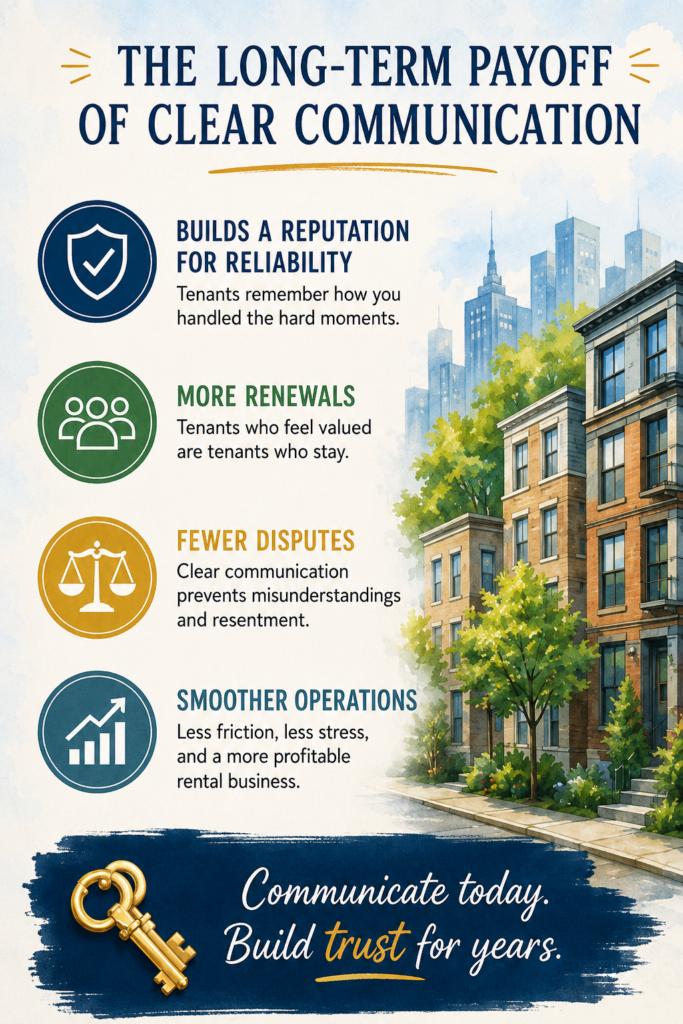
The Long-Term Payoff
Landlords who communicate consistently during repairs build something genuinely difficult to replace: a reputation for reliability. Tenants decide whether to renew their lease based largely on how they felt they were treated when something went wrong. A landlord who kept them informed through a difficult repair is a landlord they trust. That trust translates directly into longer tenancies, fewer disputes, and a portfolio that runs with far less friction than one built on silence and crossed fingers.