This Content Is Only For Subscribers
The Texas rental market operates on a distinct seasonal rhythm, with the late spring and summer months representing the apex of transactional volume. For property owners and managers, this period of heightened turnover is not merely a logistical challenge; it is a critical window for operational recalibration. While the immediate focus is often on turning units and securing new tenants, the most sophisticated landlords recognize this mid-year surge as the optimal moment to review, revise, and fortify their primary legal instrument: the lease agreement.
Welcome to Landlord Legal Lowdown, a column dedicated to dissecting the legal complexities of property management. This month, we address the strategic necessity of the mid-year lease review. A lease is not a static document to be filed away upon signature; it is a living contract that must evolve in response to changing market conditions, shifting statutory requirements, and the practical lessons learned from the previous year’s operational challenges. Failing to update your lease framework exposes your portfolio to unnecessary risk and leaves potential revenue on the table.
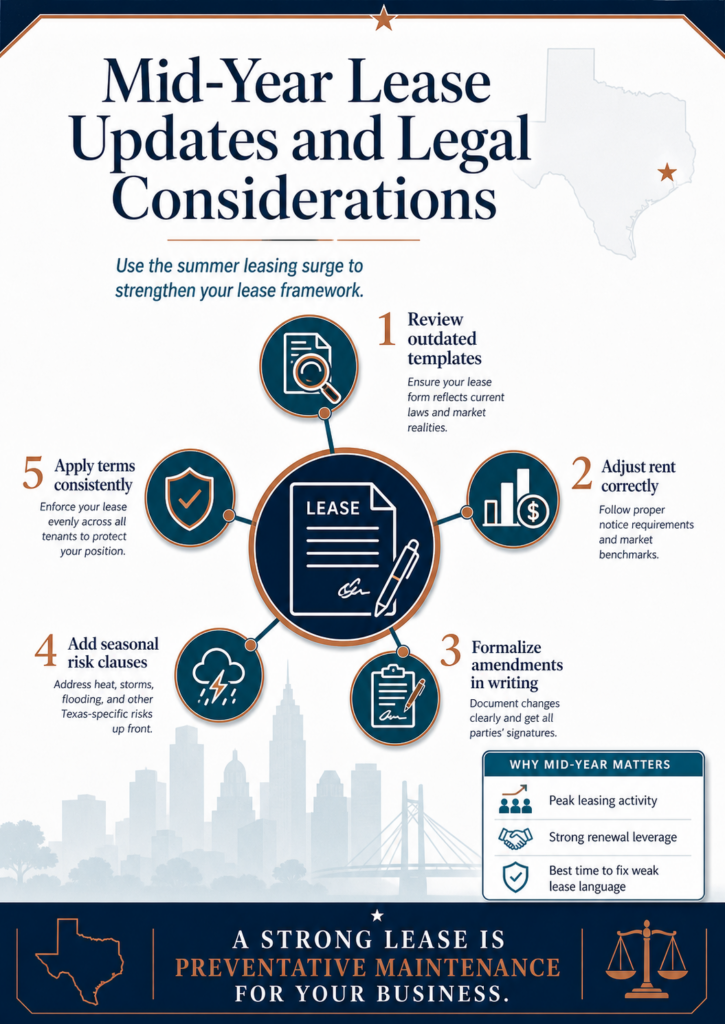
The Danger of the Static Lease
A common and perilous practice among independent landlords is the perpetual reuse of a single, aging lease template. Whether downloaded from the internet a decade ago or inherited from a previous property manager, these static documents often fail to account for the nuances of modern property management and the specific requirements of the Texas Property Code.
The legal landscape is not static, and your lease cannot afford to be either. A lease drafted in 2018 may not adequately address the complexities of remote work, the proliferation of electric vehicles, or the increasing prevalence of emotional support animal requests. Furthermore, a static lease fails to capture the specific operational pain points you have experienced. If you spent the winter battling tenants over burst pipes due to their failure to drip faucets, your summer lease renewals must include specific, enforceable language addressing winterization responsibilities.
The mid-year review is the mechanism by which you translate operational friction into contractual protection.
Navigating Rent Adjustments and Texas Law
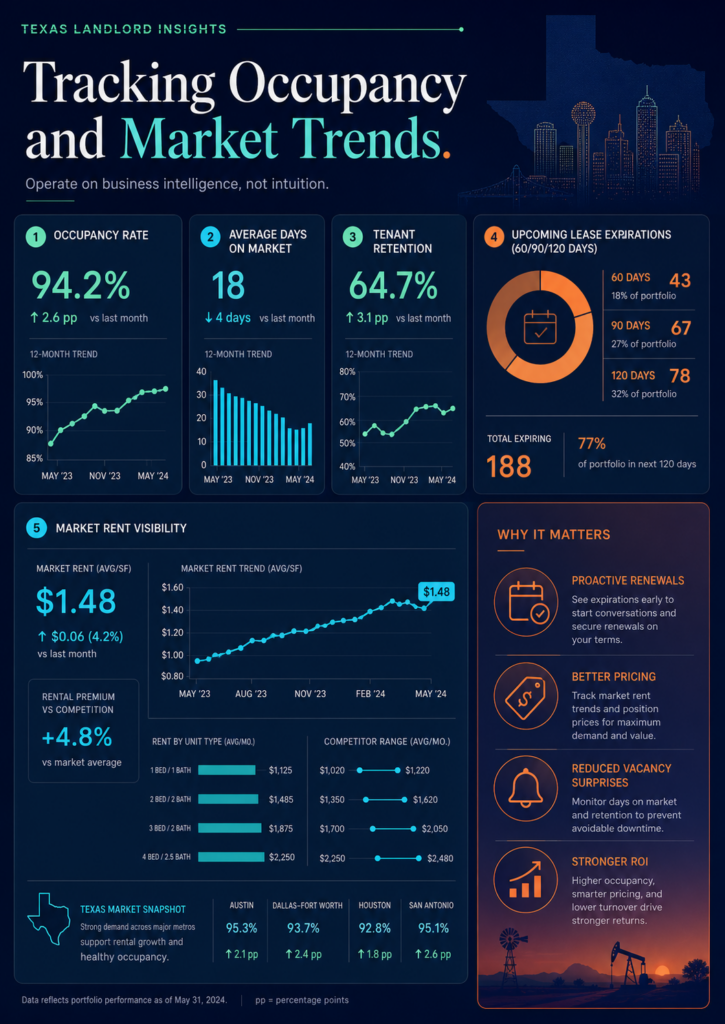
The most common impetus for a mid-year lease update is the adjustment of rent to reflect current market rates. The Texas summer market typically commands the highest rental rates of the year, making it the ideal time to implement necessary increases. However, executing these adjustments requires strict adherence to legal protocols.
The Absence of Rent Control in Texas
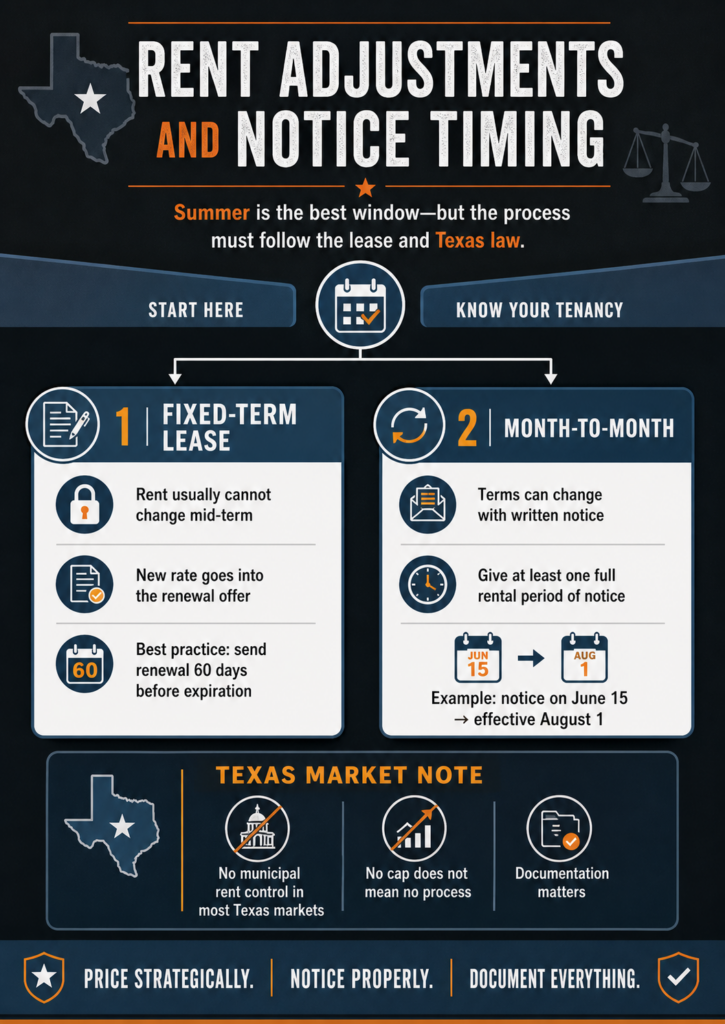
Texas is a decidedly pro-landlord state in many respects, most notably in its prohibition of municipal rent control. Under the Texas Local Government Code, cities and municipalities are generally preempted from enacting ordinances that control the rent a private commercial landlord can charge. This provides property owners with significant latitude to adjust pricing based on market demand.
Notice Requirements for Rent Increases
While there is no statutory cap on the amount of a rent increase, the timing and method of the increase are strictly governed by the existing lease agreement and the Texas Property Code.
If a tenant is on a fixed-term lease (e.g., a standard 12-month agreement), the landlord cannot unilaterally raise the rent before the expiration of that term, unless the lease contains a highly unusual and specific provision allowing for mid-term adjustments (which is generally discouraged as it undermines the stability of the contract).
For month-to-month tenancies, Texas Property Code Section 91.001 requires a minimum of one rental payment period’s notice to terminate the tenancy or change its terms, including rent increases. If the rent is paid on the first of the month, a notice of a rent increase provided on June 15th would not be effective until August 1st.
The Strategic Renewal Offer
When approaching the end of a fixed-term lease during the summer peak, the renewal offer must be handled strategically. It is advisable to present the renewal offer—inclusive of the new rental rate—at least 60 days prior to the lease expiration. This timeline serves two purposes: it provides the tenant with ample time to make an informed decision, and it ensures that if the tenant chooses to vacate, the landlord has sufficient time to market the property during the high-demand summer window.
Formalizing the Lease Amendment Process
Often, a mid-year update does not involve a full lease renewal, but rather a modification to an existing, active lease. This could involve adding a new roommate, permitting a pet, or altering a specific operational rule. These changes must be executed through a formal lease amendment.
The Necessity of Written Amendments
The Texas Association of Realtors (TAR) standard residential lease, widely considered the gold standard in the state, contains an “Entire Agreement” clause. This clause explicitly states that the written lease constitutes the entire agreement between the parties and that any prior or contemporaneous oral agreements are superseded.
More importantly, it dictates that any changes to the lease must be in writing and signed by all parties. A verbal agreement to allow a tenant to adopt a dog, or a text message exchange agreeing to a temporary reduction in rent, is legally precarious and often unenforceable.
Structuring the Amendment
A valid lease amendment must clearly reference the original lease (by date and parties), explicitly state the provision being modified, and clearly articulate the new terms. If you are adding a pet mid-lease, the amendment must detail the specific animal (breed, weight, age), outline the additional pet deposit or non-refundable fee, and incorporate the standard pet rules regarding noise, waste, and liability.
Crucially, an amendment must be signed by all parties who signed the original lease. If a property is leased to three roommates, an amendment altering the rent or adding a pet must be signed by all three individuals, not just the one who initiated the request.
Addressing Seasonal and Emerging Liabilities
The mid-year review is the ideal time to incorporate addendums that address seasonal risks and emerging trends in property management. The goal is to close loopholes before they result in financial loss or legal disputes.
The Pool and Spa Addendum
If your property features a swimming pool or hot tub, a standard lease is insufficient. Texas summers drive heavy pool usage, elevating the risk of injury and the cost of maintenance. A comprehensive pool addendum must clearly delineate maintenance responsibilities. If the tenant is responsible for maintenance, the addendum must specify the required chemical balance and cleaning frequency, and grant the landlord the right to hire a professional service at the tenant’s expense if the pool is neglected. Furthermore, the addendum must include robust liability waivers and indemnification clauses protecting the landlord from claims arising from pool usage.
The HVAC Maintenance Clause
In Texas, a functioning HVAC system is not a luxury; it is a necessity, and its failure during the summer can lead to habitability claims. While the landlord is ultimately responsible for major repairs under the Texas Property Code’s duty to repair statutes, the lease must explicitly mandate tenant compliance with preventative maintenance. The lease should require the tenant to change air filters at specified intervals (e.g., every 30 days) and report any operational anomalies immediately. Failure to adhere to these preventative measures can shift the financial burden of a resulting repair onto the tenant, provided the lease language is clear and enforceable.
Clarifying Right of Entry
Summer is the season of preventative maintenance, exterior painting, and roof inspections. These activities require access to the property, which can create friction with tenants who value their privacy. The lease must clearly articulate the landlord’s right of entry. While Texas law does not specify an exact notice period for non-emergency entry (unlike some states that mandate 24 or 48 hours), the lease should establish a reasonable standard—typically 24 hours written notice—for routine maintenance and inspections. Clear contractual language regarding entry rights prevents disputes and protects the landlord against claims of violating the tenant’s covenant of quiet enjoyment.
The Legal Imperative of Consistency
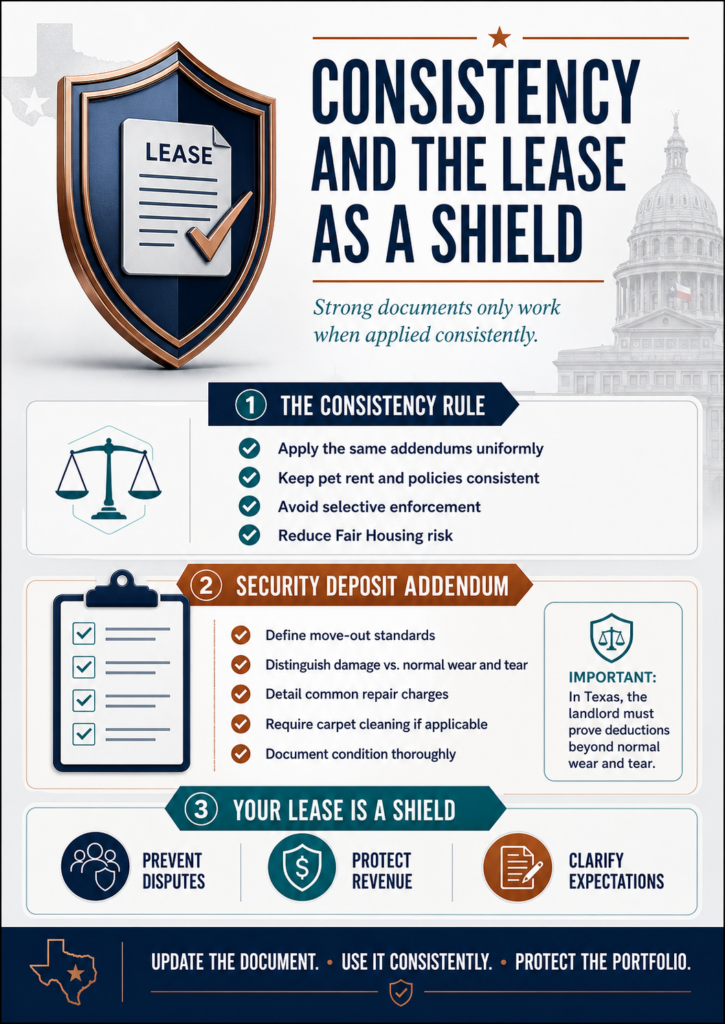
As you implement mid-year lease updates, rent adjustments, and new addendums, the overarching legal principle must be consistency. The Fair Housing Act prohibits discrimination not only in the selection of tenants but also in the terms and conditions of the tenancy.
If you decide to require a specific winterization addendum, it must be applied to all properties in your portfolio, not just those occupied by tenants you deem “irresponsible.” If you implement a $50 monthly pet rent, it must be applied uniformly to all new pets, regardless of the tenant’s tenure or your personal relationship with them. Inconsistent application of lease terms, even if unintentional, can create a disparate impact and invite costly Fair Housing complaints.
The Security Deposit Addendum
As leases turn over and new tenants move in, the security deposit becomes the focal point of the landlord-tenant relationship. A standard lease often glosses over the specific conditions under which deductions can be made. To protect yourself from disputes at move-out, consider adding a comprehensive security deposit addendum during your mid-year review.
This addendum should clearly outline the tenant’s responsibility for returning the property to its original condition, minus normal wear and tear. In Texas, the burden of proof for damages beyond normal wear and tear rests entirely on the landlord. Therefore, the addendum should explicitly state the required move-out cleaning standards, including professional carpet cleaning, and specify the costs associated with common repairs, such as replacing broken blinds or patching drywall holes.
By detailing these expectations in writing at the beginning of the lease term, you establish a clear, enforceable standard that minimizes conflict and ensures the property is maintained to your specifications.
Conclusion: The Lease as a Shield
In the high-stakes environment of Texas property management, your lease is your primary shield against liability and financial loss. A static, outdated lease is a brittle shield. By committing to a rigorous mid-year review—updating language, formalizing amendments, and strategically adjusting rents in accordance with Texas law—you transform your lease into a dynamic, protective asset.
Treat the summer turnover season not just as an opportunity to fill vacancies, but as the designated moment to strengthen your legal foundation. A well-crafted, legally compliant lease is the ultimate preventative maintenance tool for your business.