This Content Is Only For Subscribers
One of the most common objections independent landlords raise when told they need to document their communications is that it sounds like too much work. They imagine elaborate filing systems, legal binders, and hours spent organizing paperwork that may never be needed. That objection reflects a misunderstanding of what an effective communication record system actually looks like.
You do not need a law firm’s document management infrastructure to protect yourself as a Texas landlord. You need a simple, consistent system that captures the right information and makes it retrievable when it matters. The landlords who struggle with record-keeping are almost always the ones who overcomplicated it before they started.
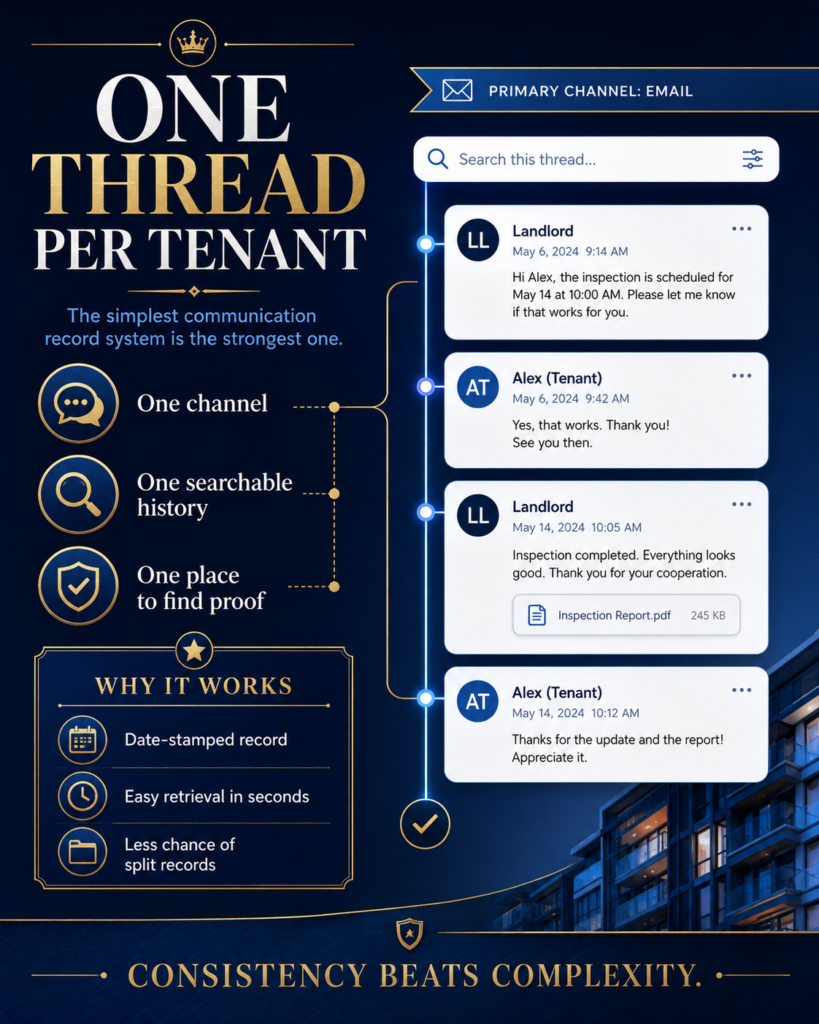
The Core Principle: One Thread Per Tenant
The single most effective organizational principle for landlord communication records is to maintain one continuous, searchable communication thread per tenant. In practice, this means conducting all substantive communication with a tenant through a single channel, whether that is email, a property management portal, or a dedicated messaging platform, and keeping that channel intact for the duration of the tenancy.
Email is the most universally accessible and legally reliable option for most independent landlords. A dedicated Gmail or Outlook account used exclusively for property management creates a searchable archive of every exchange, automatically date-stamped and organized by sender. When a dispute arises and you need to locate the email in which a tenant acknowledged a lease violation, or the message in which you confirmed a repair timeline, you can find it in seconds.
The critical discipline is consistency. If you send a formal entry notice by email and then follow it up with a casual text message, you have split the record. If the tenant later claims they never received proper notice, your text message may be difficult to produce in a legally credible format. Keep the substantive communication in one place, and use that place every time.
What Actually Needs to Be Saved
Not every message you exchange with a tenant requires permanent archiving. The records that matter are those that document agreements, obligations, notices, and disputes.
All formal notices must be saved with proof of delivery. This includes entry notices, lease violation notices, notices of non-renewal, and notices to vacate. For notices delivered by email, the sent message itself serves as the record. For notices delivered by certified mail or posted to the door, retain the tracking receipt, the signature card, or a signed affidavit of posting alongside a copy of the notice.
All maintenance-related communication must be retained from the initial request through the final resolution: the tenant’s written request, your acknowledgment, any updates about scheduling or delays, and the vendor invoice confirming the completed work. This chain is your defense against claims that you failed to act with diligence under the Texas Property Code.
Any written confirmation of a verbal agreement must be saved. When you follow up a phone conversation with an email summarizing what was discussed, that email is a critical record. Save it in the tenant’s communication thread and do not delete it, even after the tenancy ends.
Move-in and move-out documentation, including the signed inventory and condition form and all date-stamped photographs, should be stored in a dedicated folder for each property, linked to the communication records.
How Long to Keep Records
Texas landlords should retain all communication records for a minimum of four years after the end of a tenancy. This timeline accounts for the general statute of limitations for contract disputes in Texas, which is four years under the Texas Civil Practice and Remedies Code. Security deposit disputes, lease violation claims, and property damage allegations can all surface well after a tenant has moved out, and your records need to be accessible for the full period during which a claim could legally be filed.
Cloud storage is the most practical solution for long-term retention. Google Drive, Dropbox, and similar platforms allow you to store records at essentially no cost, access them from any device, and share specific files with an attorney or a court if needed. A simple folder structure organized by property address and tenant name, with subfolders for lease documents, communication records, maintenance records, and financial records, is sufficient for most independent landlords managing a small portfolio.
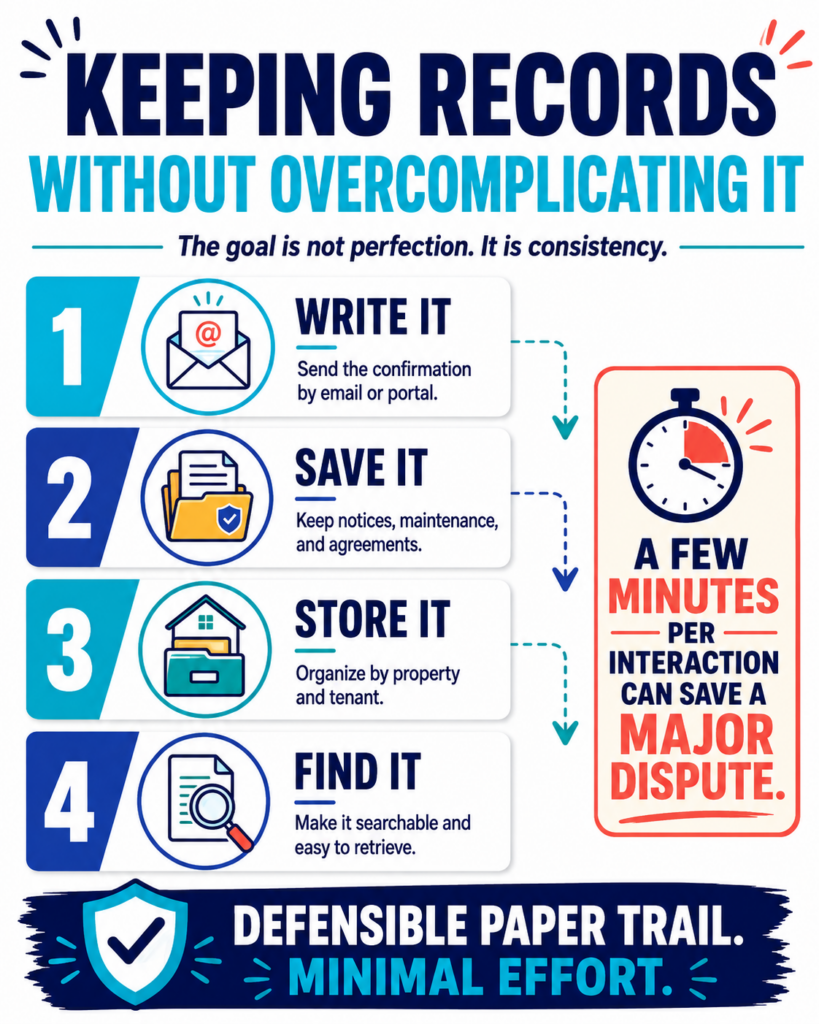
The Standard That Protects You
The goal of a communication record system is not perfection. It is consistency. A landlord who reliably sends written confirmations of verbal agreements, retains formal notices with proof of delivery, and keeps maintenance records from request through resolution has built a defensible paper trail without spending more than a few minutes per interaction maintaining it. That consistency, applied over the life of every tenancy, is what separates landlords who navigate disputes cleanly from those who find themselves unable to prove what they know to be true.