When the Greater Houston heat and humidity peak in July, your inbox can turn into a battlefield. Between AC failures, clogged condensate lines, storm-related exterior damage, and the usual surge in move-out notices, a simple email folder is no longer a management tool. It is a liability.
Welcome back to Rental Technology. If you are still managing summer maintenance requests by text message and email, you are operating at a serious disadvantage. Greater Houston summers can produce a fast mix of cooling calls, plumbing issues, drainage concerns, storm-related repairs, and turnover tasks. That volume requires a dedicated tracking platform. This month, we are breaking down the software solutions that bring order to the chaos and help ensure no ticket falls through the cracks when heat, humidity, and summer storms all push maintenance volume higher.
The Problem with the Inbox
An email inbox is a chronological list, not a workflow. When a tenant emails you about a broken garbage disposal on Tuesday and another texts you that the AC is no longer cooling properly on Wednesday, you are forced to mentally triage both problems and remember the status of each one.
During a Greater Houston summer, maintenance volume can jump quickly after a heat wave or heavy storm. That is when the mental juggling act fails. You forget to follow up with the HVAC company, the tenant gets frustrated, and a manageable repair can turn into a larger conflict. You need a platform that converts a static message into a dynamic, trackable ticket.
Purpose-Built Property Management Software
For landlords managing more than a handful of homes, dedicated property management software is often the strongest option for request tracking. Platforms like Buildium, AppFolio, and TenantCloud are built around the concept of the maintenance ticket.
The Tenant Portal Advantage
The core feature of these platforms is the tenant portal. Instead of texting you, the tenant logs into an app and submits a request. The software forces them to categorize the issue (e.g., Plumbing, HVAC, Electrical) and allows them to upload photos or videos directly from their smartphone.
This structure is invaluable. Before you even open the ticket, you know whether you may need to dispatch an HVAC technician for a home struggling to cool in Houston’s heat and humidity, send someone to investigate water near an air handler, or batch a minor drywall or fence repair for later in the week.
Vendor Integration and Tracking
Once the ticket is in the system, dedicated property management software allows you to assign it directly to a vendor. The vendor receives a notification, completes the work, and uploads the invoice to the same ticket. You, the tenant, and the vendor can all see the repair status, reducing the endless phone calls asking when the technician is coming or whether a part has arrived.
The Agile Alternative: General Task Managers
If you operate a smaller portfolio in Houston or the surrounding Greater Houston market and the cost of dedicated property management software is hard to justify, you can build a highly effective tracking system using general task managers like Trello, Asana, or Monday.com.
The Kanban Board Approach
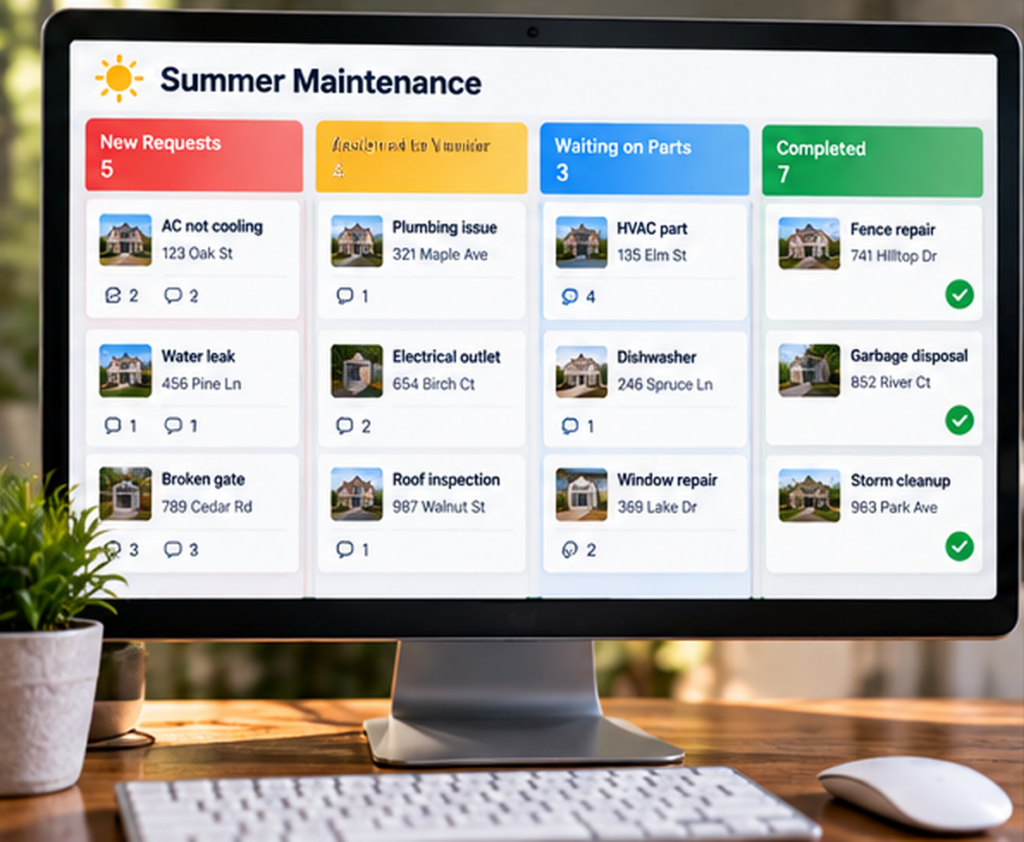
Trello, for example, uses a Kanban board system that works well for visual tracking. You can create a board called “Summer Maintenance” with columns labeled “New Requests,” “Assigned to Vendor,” “Waiting on Parts,” and “Completed.”
When a request comes in, you create a card. You can attach photos, set due dates, and tag specific vendors. As the repair progresses, you simply drag the card from left to right across the board. At a single glance, you can see exactly where every repair stands.
Automation via Zapier
The real power of these general tools appears when you connect them with automation software such as Zapier. You can create a simple online form for tenants to submit maintenance requests. The automation can then take the information from that form and create a new card in your task board, keeping the request out of a crowded email inbox.
Choosing Your Weapon
The platform you choose matters less than your commitment to using it consistently. If you implement a ticketing system but continue to manage some requests through personal texts, some through email, and others through the portal, the system will eventually fail.
As Greater Houston moves into the busiest part of summer, set a clear process. Train tenants to use the portal or request form. When a routine maintenance text comes in, redirect it once: “Please submit this through the portal so we can track it and dispatch the right vendor.” Emergency procedures should still be clearly defined and easy for tenants to use, especially during severe weather or power interruptions.
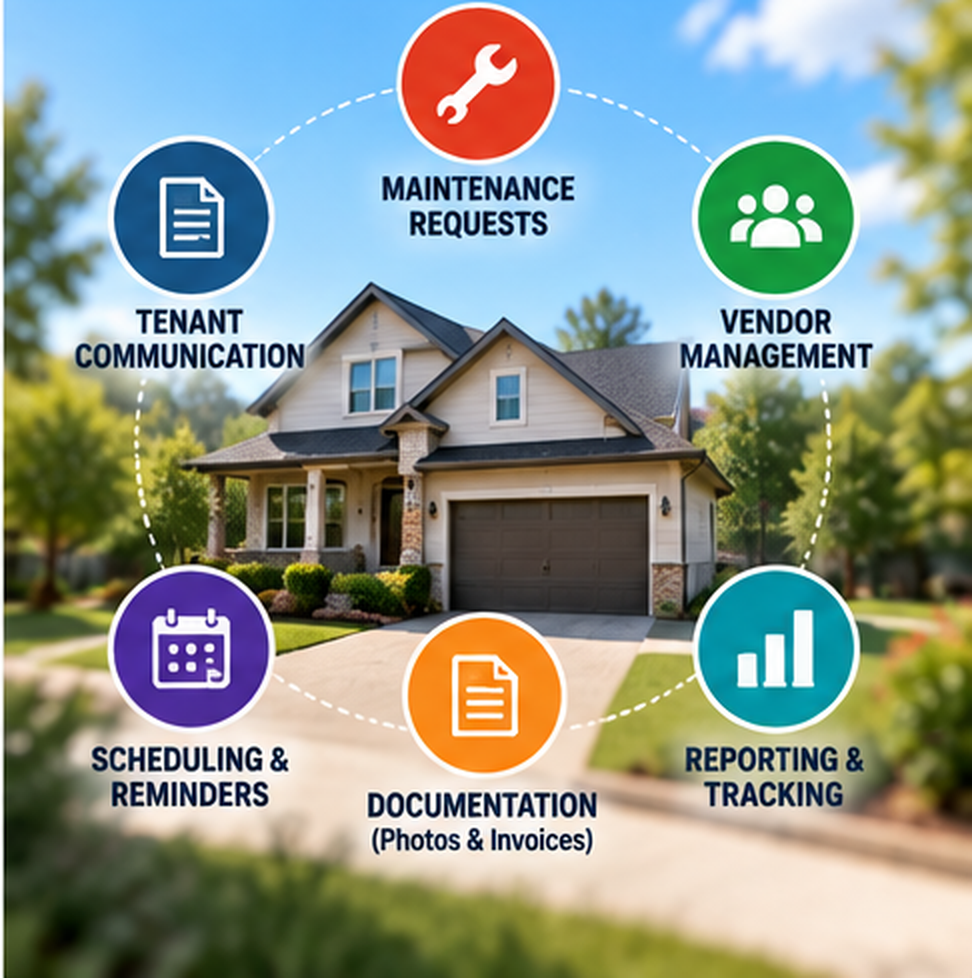
By routing requests into one centralized, trackable platform, you regain control of your time. You reduce the chance of forgotten repairs, streamline vendor communication, and build a system that can handle the combination of heat, humidity, storms, turnover, and maintenance volume that comes with a Greater Houston summer.