When summer settles over the Greater Houston Area, rental properties can spend weeks under intense heat and heavy humidity with very little relief. The two systems that carry the biggest load, and can create the biggest repair bills when they fail, are the HVAC and plumbing systems.
Welcome back to Maintenance Matters. A mid-summer failure in either system is more than an inconvenience. It can turn into an expensive emergency at the exact time Houston-area HVAC and plumbing companies are busiest. The goal of this mid-summer check is to catch subtle signs of strain before they become total system failures. Grab your flashlight and infrared thermometer. Let’s get to work.
The HVAC System: Surviving the Summer
Across Greater Houston, an air conditioner may run nearly nonstop through July and August. Long stretches of heat combined with high humidity put extra pressure on the system because it is working to cool the home and remove moisture from the air. A visual inspection alone is not enough. You need to test how the system is actually performing.
The Temperature Split Test
The most effective way to gauge the health of an AC unit without calling a technician is to check the temperature split. Turn the thermostat down to ensure the unit is running. Wait ten minutes for the system to stabilize.
Using an infrared thermometer, measure the temperature of the air pulled into the return vent. Then, measure the air blowing out of the supply register closest to the indoor unit.
Subtract the supply temperature from the return temperature. You are looking for a difference, or temperature split, of roughly 15 to 20 degrees. If the return air is 75 degrees and the supply air is 58 degrees, your split is 17 degrees, which generally indicates the system is cooling effectively. If the split is much lower, the system may be struggling. Schedule a professional service call before a minor performance issue becomes a complete failure.
The Condensate Drain Line
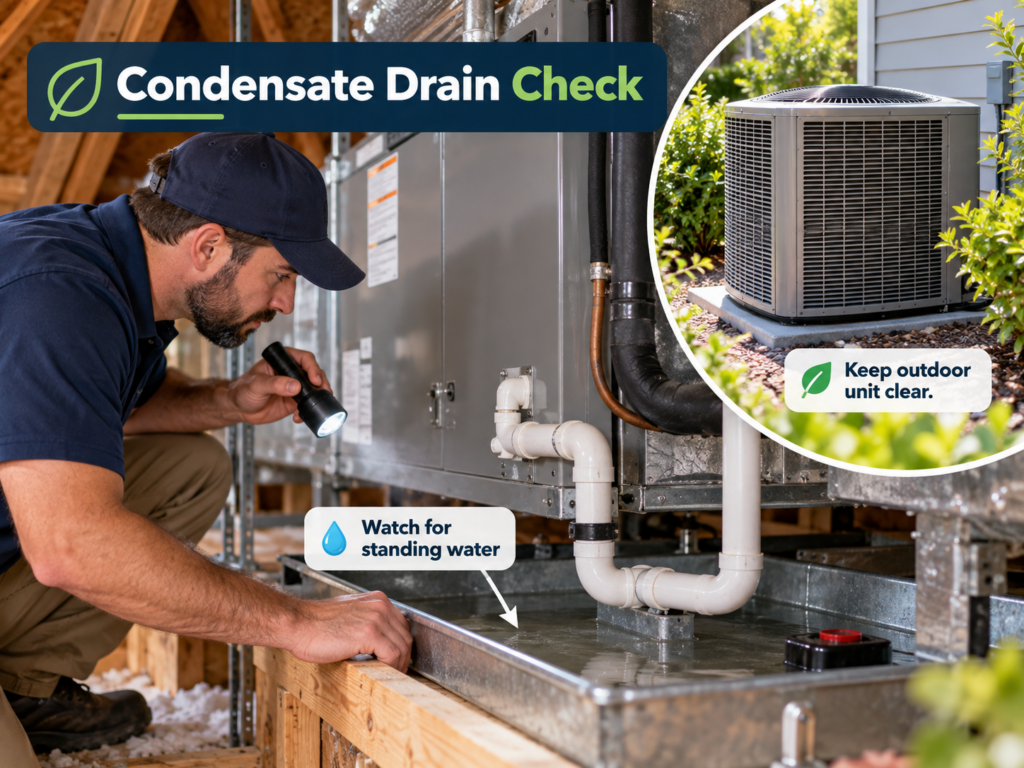
As the AC cools the air, it also removes moisture. That moisture collects in the drain pan and exits through the condensate drain line. In Greater Houston’s humid summer climate, a heavily used system can produce a steady stream of condensate, while algae and sludge can gradually restrict the drain line.
When the line clogs, the drain pan can overflow. If the indoor unit is in the attic, that may mean water damage to ceilings, insulation, or drywall. Locate the condensate access point near the indoor unit and follow the manufacturer’s or HVAC professional’s recommended cleaning method. If you see standing water in the drain pan, treat it as a warning that the line may already be restricted and should be cleared promptly.
The Outdoor Condenser
Walk outside and inspect the condenser unit. It needs clear airflow to release the heat pulled from the house. Keep vegetation, leaves, grass clippings, and yard debris away from the unit, and maintain adequate clearance around it. In Greater Houston, summer storms and fast-growing vegetation can leave debris around the coil surprisingly quickly. If the fins are dirty, clean them gently according to the manufacturer’s instructions and avoid pressure that could bend the delicate metal.
Plumbing: Managing the Surge
Summer brings heavier water use from more showers, laundry, irrigation, and outdoor activity. Across Greater Houston, older supply lines, worn shut-off valves, and small hidden leaks can become more noticeable under heavier use. High humidity also makes it especially important to catch plumbing moisture early before it contributes to musty odors, damaged cabinetry, or other moisture problems.
The Under-Sink Inspection
The most insidious plumbing leaks are slow drips hidden inside dark cabinets. Open the cabinets under every sink. Clear out cleaning supplies so you have a clear view.
Shine your flashlight on the P-trap, supply lines, and shut-off valves. Run the water and watch for active drips. More importantly, feel the bottom of the cabinet. Is the wood warped, soft, or stained? Does it smell musty? These are signs of a slow leak that may have been developing for weeks. In Houston’s humid climate, even a small leak deserves attention because damp materials can stay wet longer than expected.
The Toilet Dye Test
A running toilet is a silent money pit. A worn flapper valve can waste thousands of gallons of water a month, sending your utility bill skyrocketing.
To test for a silent leak, remove the lid from the toilet tank and drop a few drops of food coloring into the water. Do not flush. Wait fifteen minutes and look in the toilet bowl. If the water in the bowl has changed color, the flapper valve is leaking and must be replaced. It’s a five-dollar part and a ten-minute fix that saves hundreds of dollars.

The Water Heater
Finally, inspect the water heater. High garage temperatures and humid conditions can be hard on equipment and metal connections over time. Look for rust, corrosion, or moisture around the supply lines and the base of the tank. Confirm the drain pan is dry and have any leaking or questionable safety components evaluated by a qualified professional.
By thoroughly inspecting HVAC and plumbing systems in the middle of a Greater Houston summer, you move from simply hoping they survive to actively managing their condition. You protect your cash flow, reduce emergency calls, and give your tenants a better chance of staying cool and dry through the hottest and most humid part of the year.