This Content Is Only For Subscribers
In property management, there are two ways to operate: reactively or proactively. The reactive landlord waits for the call about a failed air conditioner on a 100-degree Greater Houston afternoon. The proactive landlord inspects the property before peak heat and humidity expose every weak point. For landlords across the Greater Houston Area, the mid-summer check is not just good practice. It is fundamental asset protection during the most demanding stretch of the year.
Welcome to Maintenance Matters, your resource for practical, actionable guidance on keeping rental properties in prime condition. We are not here to talk about theory. We are here to talk about process. This column is about providing the checklists and know-how to get the job done right. Grab a clipboard and a flashlight. It is time to walk your Greater Houston rental for its mid-summer checkup.
The Mid-Summer Mindset and Toolkit
A successful mid-summer walkthrough is systematic. It is not a casual stroll. It is an examination of your asset under maximum stress. Before you begin, assemble your toolkit. Bring a detailed checklist, a clipboard and pen, and a camera or smartphone. Document everything with photos. A picture of a small crack now can be valuable if it becomes a larger one later. Also bring a powerful flashlight for attics, cabinets, and dark corners, along with an infrared thermometer for basic AC performance checks.
Approach the walkthrough like a detective looking for signs of fatigue. Small clues such as moisture stains, pest activity, cracking, weak airflow, drainage problems, or musty odors may point to larger issues caused by Houston heat, humidity, heavy rain, and summer use. Document what you find, even when it looks minor. The goal is to address manageable issues now instead of discovering them after they become August emergencies.
The Exterior Inspection: Defending Against the Elements
Your inspection should begin outside. The building envelope is the property’s first line of defense against Greater Houston weather. By mid-summer, roofs, sealants, siding, landscaping, and drainage have already dealt with months of sun, humidity, wind, thunderstorms, and periods of heavy rain. Start at the street and work your way toward the house.
Roof, Gutters, and Siding
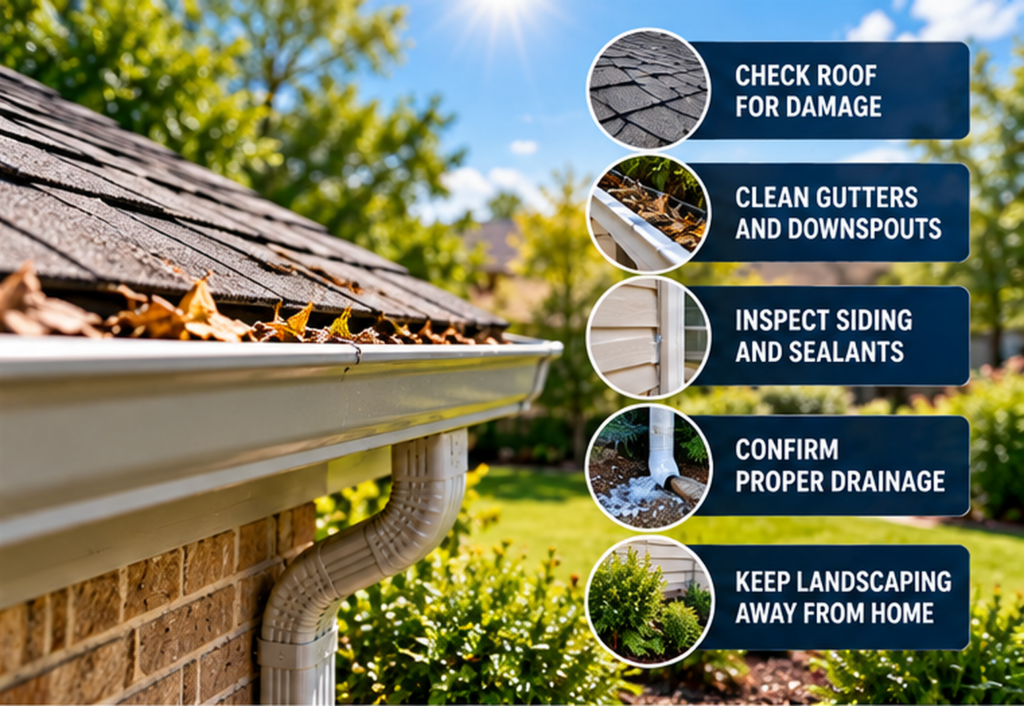
Begin with a visual roof inspection from the ground or another safe vantage point. Look for missing, cracked, or curling shingles, especially after spring thunderstorms, hail, or strong winds. Pay close attention to flashing around chimneys, vents, and roof penetrations, where heat, storms, and movement can expose weak seals.
Next, check gutters and downspouts. Greater Houston can receive intense rain in a short period, and a drainage problem that is invisible on a dry day can become obvious during the next thunderstorm. Make sure gutters are secure and clear of debris, and confirm downspouts move water away from the foundation rather than dumping it beside the slab.
Inspect siding, brick, trim, and exterior sealants for cracks, peeling paint, or signs of moisture entry. Strong sun can dry and shrink caulk around windows and doors, while humidity and wind-driven rain test every weak point. Replacing failed sealant helps keep conditioned air inside and stormwater outside.
Foundation and Landscaping
Greater Houston soil conditions can change substantially as the ground moves between saturated periods and stretches of dry summer heat. Walk the perimeter and look for new cracks, separation around windows or doors, or areas where soil has pulled away from the slab. If the property uses irrigation or foundation-zone watering, make sure the system is functioning properly and is being used appropriately for that property.
Inspect the landscaping. Trees and shrubs should be kept away from siding, windows, roof edges, and HVAC equipment. Overgrowth can trap moisture, hide pest activity, and interfere with airflow. Also confirm that grading, drains, gutters, and downspouts still move stormwater away from the structure. In Greater Houston, good drainage is a core part of protecting the property, not an afterthought.
The Interior Inspection: Core Systems Under Stress
Once the exterior is checked, move inside. The interior inspection focuses on the systems that carry the heaviest summer load in Greater Houston: HVAC, plumbing, electrical, and water-heating equipment.
The HVAC System: The Summer Lifeline
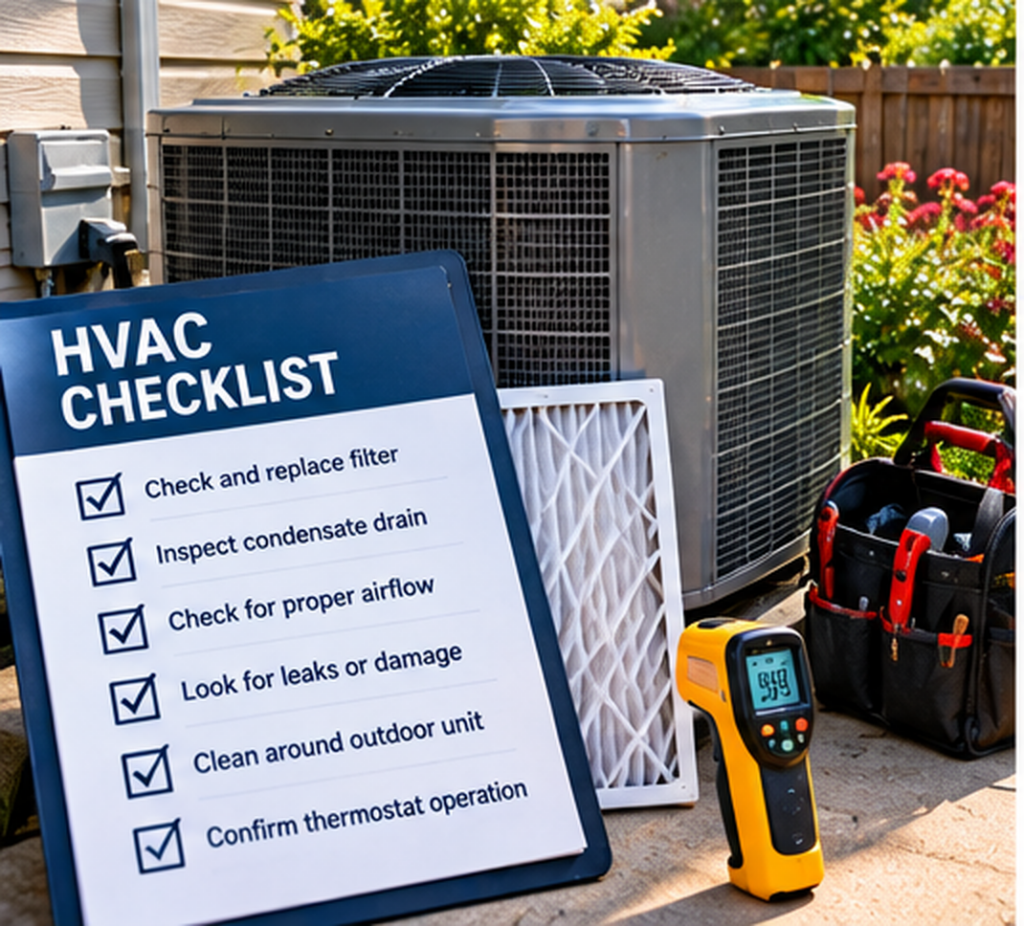
The air conditioning system is one of the most important components of a Greater Houston rental property in July and August. Start with the air filter. A dirty filter restricts airflow, forces the system to work harder, and can contribute to comfort problems or equipment failure. Confirm that filter replacement is being handled according to the lease and the needs of the system.
Next, inspect the condensate drain. Long AC run times combined with Houston humidity mean the system is constantly removing moisture from the air. Algae and sludge can restrict the line and allow water to back up into a drain pan, attic, ceiling, or floor. Check for standing water or signs of previous overflow and have a restricted line cleared before it causes property damage.
Use an infrared thermometer as a basic screening tool to compare return-air and supply-air temperatures. A noticeable temperature difference should be present when the system is operating normally. If cooling performance seems weak, airflow is poor, or the temperature split is unusually low, schedule a qualified HVAC professional rather than waiting for the unit to stop completely.
Plumbing: Preventing Catastrophic Leaks
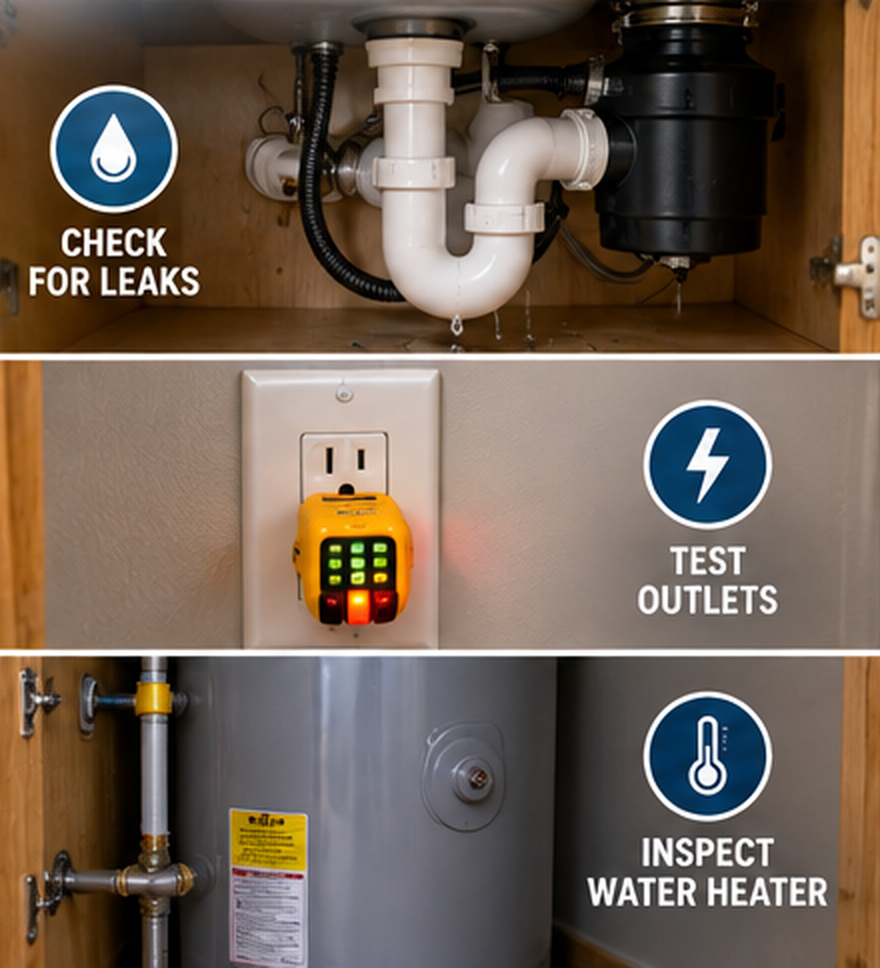
Summer brings more showers, laundry, irrigation, and general water use. Open cabinets under sinks and inspect supply lines, valves, drains, and cabinet floors. Look for active drips, staining, warped material, corrosion, or musty odors. In Greater Houston’s humid climate, even a small hidden leak can create a persistent damp area that deserves attention.
Check faucets and showerheads for drips and mineral buildup. Test toilets to make sure they stop running after each flush. Small leaks waste water and can become more expensive over time, especially when several rental properties have the same issue.
Inspect the water heater for rust, corrosion, moisture, and deterioration around fittings. High garage temperatures and humid conditions add to summer stress. If you see active leakage or questionable safety components, bring in a qualified professional.
Electrical and Safety Devices
The electrical system must be checked for obvious safety and functionality issues. Test GFCI protection in applicable kitchens, bathrooms, garages, and exterior areas using the device’s test and reset buttons. If a device does not operate correctly, have it evaluated and replaced as needed rather than leaving a questionable outlet in service.
Check smoke alarms and carbon monoxide alarms where provided or required. Use the test function, replace batteries according to the manufacturer’s recommendations, and pay attention to the replacement age printed on the device. Do not wait for a tenant complaint to discover that an alarm is missing, damaged, or expired.
High-Traffic Areas and Preventative Measures
With the core systems checked, turn to the parts of the home experiencing the most daily wear. Summer schedules, children home from school, guests, and increased indoor time during the hottest part of the day can all add traffic to a rental property.
Flooring, Walls, and Ceilings
Walk through every room and inspect the flooring. Look for torn carpet seams, lifting vinyl planks, or cracked tiles. These are trip hazards that must be addressed.
Scan walls and ceilings for water stains or discoloration. In Greater Houston, ceiling marks may point to a roof leak, plumbing problem, condensate overflow, or wind-driven rain entering through a weak exterior seal. Pay special attention after strong thunderstorms or tropical weather and around windows or exterior doors.
Windows and Doors
Test windows and exterior doors to make sure they open, close, and lock smoothly. Sticking can be caused by normal wear, heat, humidity, or movement around the structure. Check screens as well. Damaged screens make it easier for mosquitoes and other pests to enter during the summer.
Check weatherstripping around exterior doors. If daylight is visible around a closed door, conditioned air may be escaping. Replacing worn weatherstripping is a simple repair that can improve comfort and reduce the workload on the AC system.
Categorize and Execute
Once you have completed your walkthrough, you will likely have a list of issues. The key to effective maintenance is triage. Categorize your findings into three tiers:
Tier 1: Immediate Safety and Asset-Protection Issues. These are conditions that may directly threaten an occupant or quickly damage the property, such as a serious electrical hazard, an active plumbing leak, major water intrusion, or a complete HVAC failure during dangerous heat. These should move to the front of the response queue immediately.
Tier 2: Professional Repairs. These require specialized skills, licensing, or equipment, such as roofing work, significant electrical repairs, water extraction, or complex HVAC problems. Schedule them with vetted vendors as soon as possible. In Greater Houston, service calendars can fill quickly during prolonged heat or after a widespread storm.
Tier 3: Routine and Handyman Tasks. These are smaller issues such as replacing failed caulk, tightening hardware, repairing a screen, or replacing a toilet flapper. They still matter, but they can usually be grouped efficiently once higher-priority work is under control.
The Communication Component
The mid-summer walkthrough is also an important communication touchpoint with tenants. A landlord who visibly maintains the property shows that repair requests and property condition are being taken seriously. That can build goodwill, especially during a Greater Houston summer when heat, humidity, and storm-related problems can become frustrating very quickly.
Ask whether the tenant has noticed anything they have not reported. Many renters will live with a slow drain, loose hinge, warm room, small ceiling stain, or dripping faucet because they do not want to bother the landlord. A direct question can uncover a minor issue before it becomes an expensive one.
Use the visit to clarify tenant responsibilities under the lease, particularly HVAC filter replacement, irrigation responsibilities, or basic reporting expectations. A short conversation about how quickly a dirty filter or unnoticed leak can become a summer emergency is often more effective than a generic reminder email.
The Value of the Mid-Summer Check
For Greater Houston landlords, the mid-summer maintenance check is a deliberate process for protecting the property during the hardest part of the year. Catching small issues before they escalate can reduce emergency repair costs, improve tenant comfort, and protect the long-term value of the rental.
In a Greater Houston summer, hope is not a maintenance strategy. Grab your clipboard, turn on your flashlight, and get to work. Your property and your bottom line will thank you.