This Content Is Only For Subscribers
If your current system for managing the summer leasing rush involves a cluttered spreadsheet, a collection of sticky notes, and a nagging feeling that you have forgotten something, you are not alone. For decades, that was the default system for many independent landlords. But property management technology has changed. For landlords managing homes across the Greater Houston Area, the opportunity now is to replace reactive, paper-heavy processes with systems that are centralized, automated, and accessible from anywhere.
Welcome to Rental Technology, your monthly look at the software, gadgets, and digital strategies that can transform a rental business. We are here to cut through the noise and focus on the technology that actually saves time and improves operations. This month, we are tackling a familiar landlord headache: surviving the high-activity Greater Houston summer without letting maintenance requests, turnovers, renewals, and vendor communication pile up. The solution is not simply working longer hours. It is building a better operating system for the portfolio.
The Problem with Analog Systems in Peak Season
The trusty spreadsheet has its place, but as the primary tool for a dynamic summer workload, it has real limitations. It is not proactive, it is difficult to share cleanly with vendors or team members, and it is not always practical when you are in the field. A spreadsheet cannot automatically remind you that an applicant’s screening is complete. It cannot easily organize an HVAC conversation while you are standing outside a Houston rental in intense heat and humidity with your phone in your hand.
During slower periods, an analog system might feel manageable. But when several homes turn over close together, AC calls increase, storms create additional work orders, and vendors are booked across the Houston metro, the weaknesses show up quickly. Emails get lost, appointments overlap, and inspections or follow-ups can be rushed.
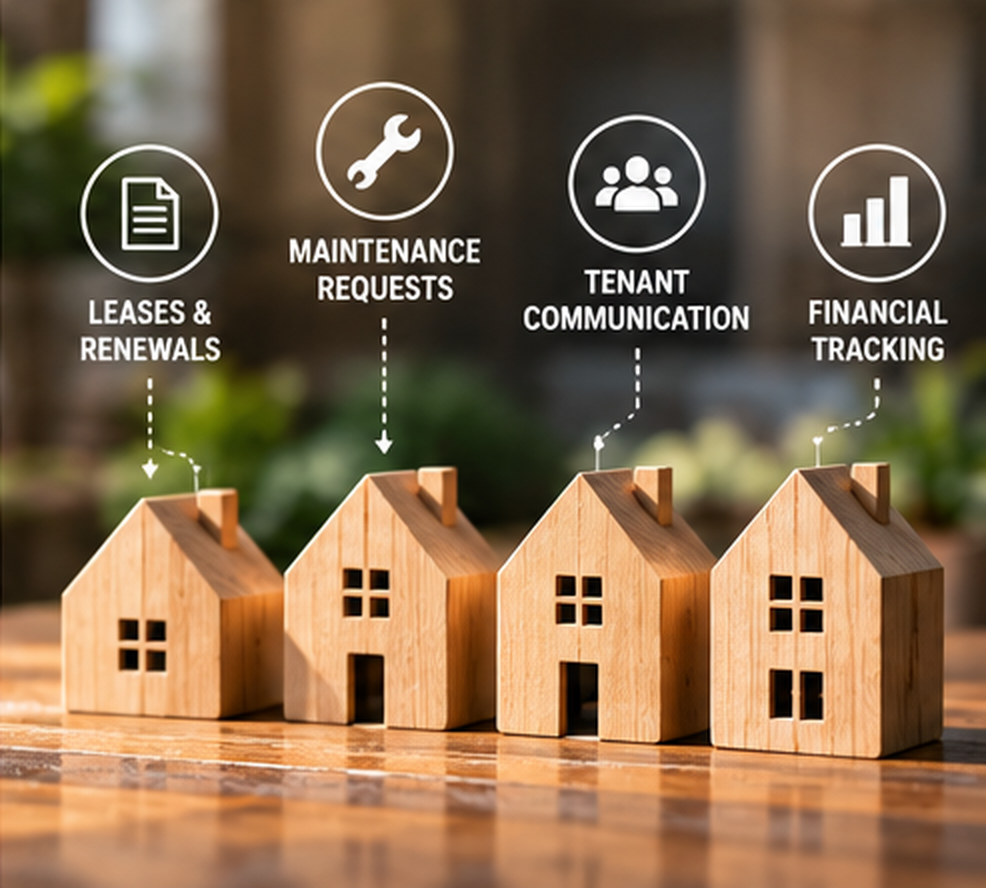
To get ahead of the summer rush, you need a system that works for you. You need a digital platform designed for action. This is more than a digital to-do list. It is a command center for the maintenance, leasing, communication, and financial activity happening across the portfolio.
Core Features of a Modern Property Management Platform
When you start exploring digital platforms, the options can be overwhelming. There are hundreds of apps aimed at real estate investors, ranging from simple rent-collection tools to enterprise software suites. To simplify the choice, focus on the core features that provide the most value for a landlord managing a busy Greater Houston summer.
First, you need a centralized dashboard. This is your single source of truth, providing a high-level overview of the portfolio. You should be able to see which homes are vacant, which leases are expiring, and the status of active maintenance requests without opening five different apps.
Second, look for automated workflows and recurring tasks. A good platform lets you create templates for common processes, such as a “Summer Turnover Checklist.” When a tenant gives notice, the workflow can automatically generate the tasks and deadlines that follow.
Third, vendor integration is crucial. You should be able to assign a work order to your preferred HVAC company, plumber, electrician, cleaner, or landscaper and keep the related photos, notes, invoice, and completion status in the same place.
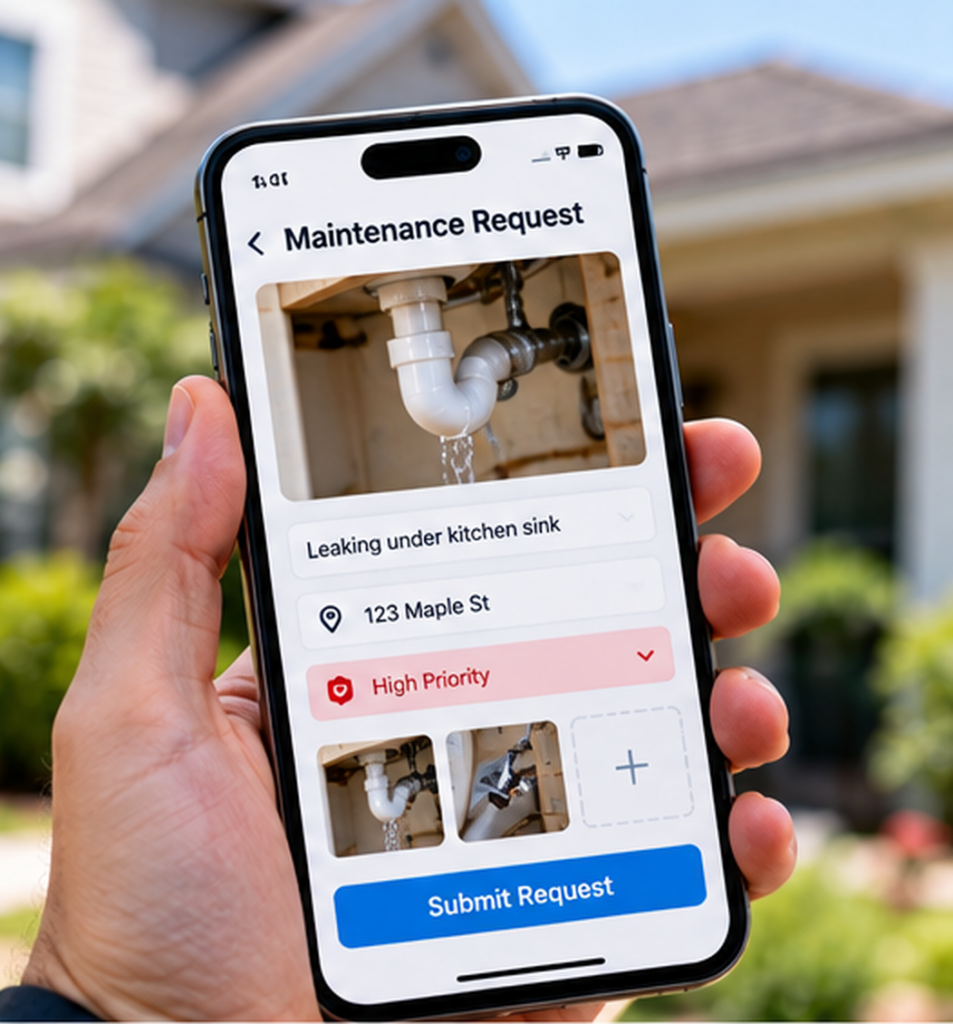
Fourth, file and photo attachments are essential for documentation. When a tenant submits a maintenance request, photos or video can help you understand the issue before dispatching a vendor. When you complete a move-in inspection, the condition form and supporting photos should be stored directly with the property or tenant record.
Finally, the platform needs a strong mobile experience. Landlords are rarely sitting at a desk during a busy summer. You may be checking a vacant home in Houston, meeting a contractor in Katy, or reviewing a repair request from The Woodlands, Pearland, or another part of the metro. The system should work just as well on a phone as it does on a laptop.
Dedicated PM Software vs. General Task Managers
The first major decision is whether to invest in dedicated property management software or adapt a general task-management tool. Both approaches can work, and the right choice depends on the size of the portfolio, the complexity of the operation, and the budget.
Dedicated Property Management Software
Platforms like Buildium, AppFolio, and TenantCloud are built specifically for real estate. They can integrate accounting, leasing, maintenance, payments, and communication into a single operating environment.
The advantage is consolidation. Depending on the platform and plan, landlords may be able to market vacancies, collect rent, sign leases, track work orders, and keep financial records within one system. Tenants benefit from having a single portal for common tasks.
The tradeoff is cost and complexity. Some systems can be more than a small portfolio needs, and the learning curve can be real. A landlord with three single-family homes may not need the same software stack as an operator managing dozens of properties across several Greater Houston communities.
General Task Management Tools
If you have a smaller portfolio and a tight budget, you can still build an effective system using general task managers like Asana, Trello, or Monday.com.
These tools are customizable and visually intuitive. You can create a Kanban board for turnovers, moving a property card from “Notice Given” to “Make Ready” to “Listed” to “Leased.”
The limitation is that these tools are not built specifically for rental housing. They usually do not include rent collection, screening, lease generation, or property accounting, so you may need to connect several apps to create a complete workflow.
Streamlining Tenant Communication
Communication is the lifeblood of property management, but during a busy summer it can quickly become the bottleneck. If every tenant, vendor, and applicant is texting your personal phone, the operation becomes harder to track and harder to step away from.
The first step is to establish a dedicated business communication channel. A separate business number or phone service can route calls to your existing phone while keeping personal and rental communication separate. It can also help you set business hours and define what happens after hours when a true emergency is reported.
The larger goal is to move as much routine communication as possible into a structured system. A tenant portal or request form creates a searchable, time-stamped record. When a tenant has a lease question, maintenance issue, or scheduling request, the communication stays tied to the property instead of disappearing inside a long text thread.
The Digital Leasing Process
The traditional leasing process can become a logistical headache during a fast summer market. Coordinating schedules, printing long documents, collecting signatures, and scanning everything back into a file adds unnecessary friction when applicants expect quick turnaround.
Digital lease signing is one of the most useful upgrades a landlord can make. E-signature tools or integrated signing features within property management platforms allow you to prepare the lease, send it electronically, and collect signatures without coordinating an in-person meeting.
The benefits are practical. Digital signing can shorten the leasing cycle, reduce missing initials or signatures, and automatically provide both parties with a digital copy of the completed agreement. For landlords covering a large geographic area around Greater Houston, eliminating unnecessary trips can save a surprising amount of time.
Tracking Occupancy and Market Trends
Beyond day-to-day operations, digital platforms provide another major advantage: data. A spreadsheet can store information, but a good platform can surface patterns and deadlines without requiring you to hunt for them.
A modern property management system can track key performance indicators such as occupancy, days on market, renewal activity, maintenance volume, and tenant retention. The exact reports vary by platform, but the goal is the same: turn operating data into something you can actually use.
More importantly, these platforms can provide forward-looking visibility. A digital rent roll can show which leases are expiring in the next 60, 90, or 120 days so you can begin renewal and marketing decisions before a vacancy becomes urgent.
Some platforms also connect with market-data tools or listing information that can help you evaluate rental activity by submarket. That matters in Greater Houston because a three-bedroom home in one neighborhood or suburb may behave very differently from a similar home several miles away. Use the data as context, not as a substitute for local judgment.
Future-Proofing Your Investment Portfolio
When evaluating software, consider where the rental business is headed. The technology you choose today should be able to support tomorrow’s portfolio. If you plan to grow from a few single-family homes to a much larger operation, a simple task board may eventually become a bottleneck. At the same time, buying an enterprise system before you need it can eat into cash flow without adding enough value.
A practical approach is to choose a platform with tiered pricing, modular features, or integrations that let you expand gradually. You might begin with rent collection and maintenance tracking, then add accounting, marketing, automation, or other features as the portfolio grows.
Pay attention to the integration ecosystem as well. The best software does not necessarily do everything by itself. It connects well with the other tools you rely on, such as accounting, screening, communications, and smart-home technology. During a long Greater Houston summer, being able to review a thermostat or water-leak alert, authorize vendor access, or check the status of a maintenance request from one primary workflow can be a genuine operational advantage.
The Technological Shift
Adopting a new digital platform requires an investment of time and attention. There is a learning curve, and the transition period can be frustrating. The payoff comes when routine information stops living in your head and starts living in a system your business can rely on.
Centralize scattered spreadsheets, texts, and notes so routine information stops living in your head. The result is more time, fewer dropped tasks, and a system that can handle a Greater Houston summer while still giving the rental operation room to grow.