This Content Is Only For Subscribers
The Greater Houston rental market operates under the same Texas statutory framework as the rest of the state, but summer places unusual pressure on local landlords. Extreme heat and humidity, heavy HVAC demand, thunderstorms, hurricanes and tropical systems, flooding, fast turnovers, and a crowded vendor schedule can expose weak operating procedures quickly. When tenant interactions and maintenance calls increase, so does the chance that a missed deadline or poorly documented decision turns into a legal problem.
Welcome to Landlord Legal Lowdown, a column dedicated to the legal complexities of property management. This month, we address the critical imperatives of summer lease compliance for landlords across the Greater Houston Area. The Texas Property Code remains the foundation, while local code requirements can vary between Houston and neighboring municipalities. From cooling-system repairs and storm-related water intrusion to pool safety, lease enforcement, eviction notices, and security deposits, the safest approach is a proactive and disciplined one.
The Statutory Duty to Repair in Extreme Heat
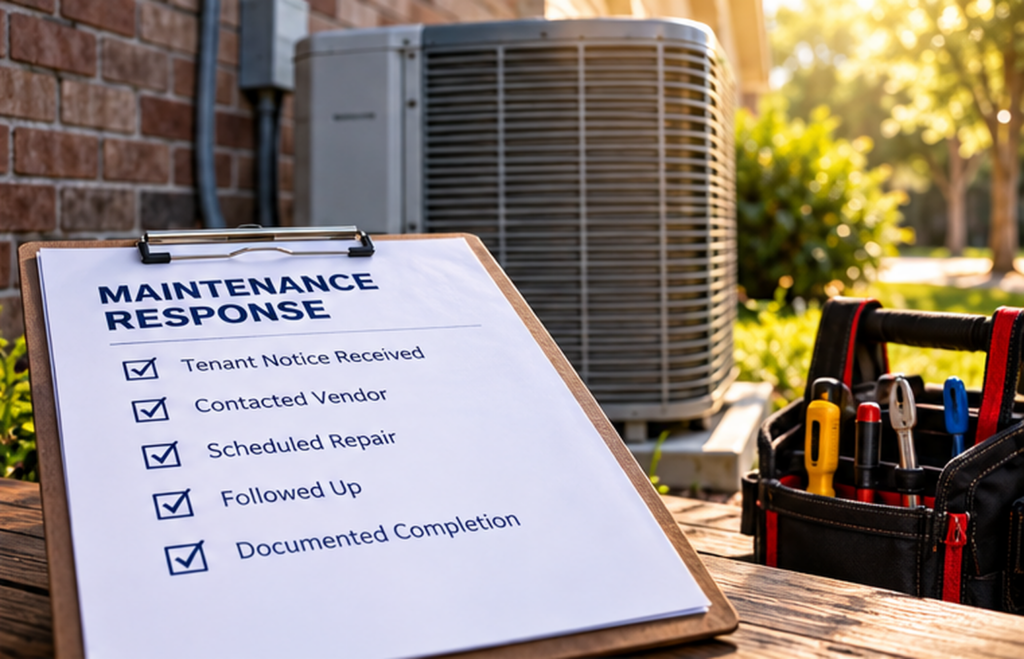
Perhaps the most visible summer compliance issue in the Greater Houston Area is the duty to respond to serious repair conditions. Cooling failures become more urgent during periods of extreme heat and humidity, while heavy rain and tropical weather can produce roof leaks, water intrusion, electrical hazards, and moisture problems with very little warning. Texas law focuses on conditions that materially affect the physical health or safety of an ordinary tenant, and the landlord’s response should be driven by the seriousness of the actual condition.
The Threshold for Immediate Action
Under Texas Property Code Section 92.052, a landlord must make a diligent effort to repair or remedy a qualifying condition after the tenant gives the notice required by law, provided the statutory conditions are met. In a Houston-area summer, a complete cooling failure can quickly become a serious health and safety concern depending on the conditions in the home. The same can be true when storm-related water intrusion creates an electrical hazard, sewage issue, or persistent moisture problem. The key is not the label on the repair request but the actual condition and the landlord’s documented response.
Texas law does not set a universal response deadline measured in hours. The standard is diligent effort, and the seriousness of the condition matters. If a Greater Houston landlord receives notice of a major HVAC failure during an August heat event, or significant water intrusion after a severe storm, prompt vendor contact and continued follow-up are important. A delay caused by a documented parts shortage or regional contractor backlog may be very different from a delay caused by waiting several days before anyone begins addressing the problem.
Tenant Obligations and the Burden of Proof
Compliance is a two-way process, but the landlord should be careful not to overstate tenant responsibility. The duty to repair is generally tied to proper notice, the tenant’s rent status when the required notice is given, and whether the condition was caused by the tenant, the tenant’s family, or guests rather than ordinary wear and tear.
The lease should clearly describe reasonable tenant maintenance responsibilities, such as replacing filters when that responsibility has been assigned to the tenant. If a technician documents that a repair was required because of tenant-caused damage or neglect, the landlord may have a basis to charge the tenant as allowed by the lease and Texas law. The key is evidence. A vague assumption that a dirty filter caused an expensive failure is much weaker than a dated service report explaining what happened.
Mitigating Liability in High-Risk Amenities
Greater Houston summers also increase use of pools, patios, outdoor kitchens, and other recreational features. A single-family rental with a backyard pool presents a different risk profile from a house without one, and the landlord should treat the pool as an ongoing safety system rather than a seasonal amenity that receives attention only when something breaks. Storm season adds another reason to inspect gates, fencing, electrical equipment, and debris conditions regularly.
The Pool Addendum and Indemnification
A pool addendum is a prudent risk-management tool for a rental with a pool. It can clearly state rules for guests, supervision, glass containers, maintenance access, and tenant reporting of damaged gates or equipment. The document should be drafted to work with the lease and applicable law rather than being treated as a way to contract away responsibilities the landlord cannot legally avoid.
Indemnity or hold-harmless language may be appropriate in some leases, but enforceability depends on the wording and circumstances. Landlords should have any significant liability provision reviewed for their specific lease rather than assuming a broad clause eliminates exposure for an unsafe condition.
Statutory Safety Requirements for Pools
Physical safety requirements also matter. Pool, barrier, gate, equipment, and permit requirements can vary across the City of Houston and the many surrounding municipalities in the metro area. Landlords should verify the current rules for the exact property instead of relying on requirements written for a different jurisdiction or type of pool. A documented preseason inspection of gates, latches, barriers, drain covers, visible electrical hazards, and storm-related damage is a strong operational practice.
The Legal Mechanics of Lease Enforcement
The increased pace of summer can also lead to more lease violations, including unauthorized occupants, pets, parking issues, noise complaints, and property damage. The legal framework does not become more flexible simply because the landlord is busy with turns. Consistent documentation remains the safest approach.

The Danger of Waiver
A common problem is delayed enforcement. If a landlord knows about a violation and then accepts the situation for months without documenting or addressing it, later enforcement can become more complicated, particularly if the landlord’s communications suggest the conduct was allowed. A no-waiver clause can help preserve rights, but it is not a substitute for clear, consistent handling of known violations.
When a violation is identified, the landlord should document the facts, review the lease, and determine what notice or opportunity to cure is actually required. Not every lease violation follows the same procedure. A strong process avoids both extremes: ignoring repeated violations and sending an eviction notice before the lease or law permits it.
Formalizing Notices
Different notices serve different purposes, and the delivery rules are not identical for every type of communication. Routine lease-enforcement messages may be sent using the methods allowed by the lease and applicable law, while a Texas Notice to Vacate must follow the delivery requirements in Property Code Section 24.005. Landlords should avoid assuming that a text or ordinary email is a substitute for a statutory Notice to Vacate.
Navigating the Eviction Process During Peak Season
When lease enforcement fails and eviction becomes necessary, the process must be handled precisely. For a Greater Houston property, the eviction suit is filed in the appropriate Justice of the Peace precinct after the required notice period has expired. Because the metro area crosses multiple counties, the landlord should confirm the correct court for the property’s location before filing. The constable or sheriff is involved in service and, when ordered by the court, execution of a Writ of Possession.
The Notice to Vacate
Under Texas Property Code Section 24.005, a landlord generally must give a tenant who defaults or holds over at least three days’ written notice to vacate before filing an eviction suit, unless the parties contracted for a shorter or longer period in a written lease or agreement. The executed lease should always be checked before the notice is prepared.
The notice should clearly identify the premises and the deadline to vacate and should be consistent with the lease and the basis for seeking possession. If another notice or opportunity to cure is required before a Notice to Vacate may be given, that step must be completed first. Landlords should avoid copying language from an old file without confirming that it fits the current lease and situation.
The Prohibition of Self-Help Evictions
Texas landlords should not use self-help measures to bypass the judicial eviction process. Shutting off essential utilities, removing a tenant’s belongings, or using a lock change as a substitute for a court-ordered eviction can create serious liability. Texas does provide a limited statutory lock-change procedure for delinquent rent when strict requirements are met, but that procedure is not an eviction and should not be confused with permanently removing a tenant from possession.
When a tenant does not vacate after the required notice and the landlord is entitled to possession, the landlord generally proceeds through the Justice Court process and, if successful, obtains a Writ of Possession that is executed by the constable or sheriff. For Greater Houston landlords, keeping the lease, payment ledger, notices, service records, photographs, and communication history organized before filing can make the process far easier to present, especially when the owner manages properties in more than one county or precinct.
Compliance in the Move-Out Process
Summer turnover also brings security-deposit deadlines into focus. With several move-outs close together, a landlord can easily lose track of when possession was surrendered, when a forwarding address was received, and when the accounting must be sent.
The 30-Day Rule for Security Deposits
Texas Property Code Section 92.103 generally requires a landlord to refund the security deposit on or before the 30th day after the tenant surrenders the premises, subject to the other provisions of the subchapter. The tenant must provide a forwarding address before the landlord’s obligation to send the refund and written description of deductions is triggered under Section 92.107.
Failing to return the deposit or provide the required written itemization within the applicable period can create a presumption of bad faith. A landlord who wrongfully retains a deposit in bad faith can face the statutory damages provided by Texas law, including $100, three times the portion wrongfully withheld, and reasonable attorney’s fees.
Documenting Deductions
Deductions should be tied to unpaid obligations or damage beyond normal wear and tear and supported by a record. A move-in condition form, dated photographs or video, invoices, and a documented move-out inspection give the landlord a much stronger basis for explaining why a deduction was made.
When providing an itemized list, specificity is better than a vague line item. Instead of writing only ‘cleaning, $200,’ identify what required the charge and keep the invoice or other supporting record. A clear description does not guarantee that every deduction will be upheld, but it makes the landlord’s reasoning easier to evaluate and defend.
Conclusion: Discipline as a Legal Strategy
Summer lease compliance is not a matter of luck. For landlords in the Greater Houston Area, it depends on repeatable systems that still work when temperatures rise, humidity stays high, storms interrupt normal operations, vendors are booked, and several tenants are moving at once.
Prompt repair response, local code awareness, consistent lease enforcement, precise eviction notices, organized turnover inspections, and disciplined security-deposit accounting all serve the same purpose: they keep routine property management from becoming avoidable legal exposure. In the Greater Houston Area, where severe weather can create multiple problems at once, the best summer compliance strategy is a process that is clear enough to follow even during the busiest week of the season.