This Content Is Only For Subscribers
The technology available to small landlords today is genuinely excellent. A free Google Voice number, a basic email account, and a simple intake form are enough to build a communication system that is organized, searchable, and professionally credible. The tools are not the problem. The way most landlords use them is.
The confusion that derails tenant relationships and creates legal exposure almost never comes from a software failure. It comes from predictable, avoidable human habits: using too many channels at once, responding too casually to formal situations, and assuming that because a message was sent, it was understood. These mistakes are easy to make and easy to fix once you know what to look for.
Using Too Many Channels at Once
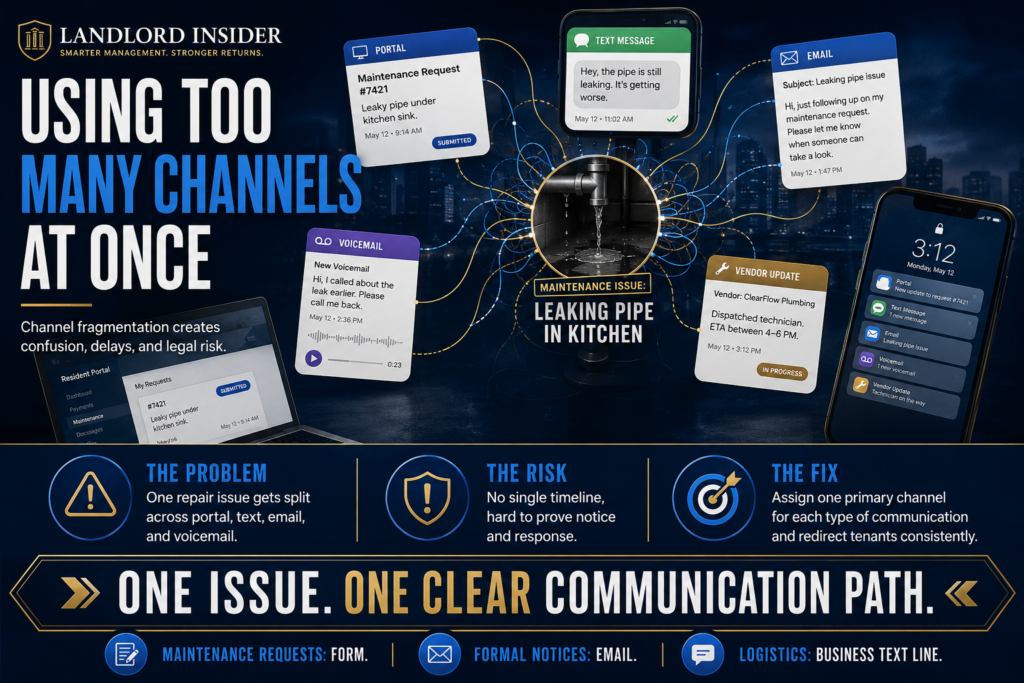
The most common digital communication mistake among small landlords is channel fragmentation. A tenant submits a maintenance request through the portal. The landlord follows up by text. The vendor confirmation comes through email. The tenant asks a follow-up question by calling the Google Voice number and leaving a voicemail. By the time the repair is complete, the communication record for that single issue is scattered across four different platforms with no single place to review the complete story.
Channel fragmentation does not just create administrative headaches. It creates genuine legal risk. If a dispute arises about whether you received proper notice of a condition or responded within a reasonable time, a fragmented record is nearly impossible to present coherently. The complete picture exists, but it requires assembling pieces from four different apps, and the gaps between them are exactly where disputes live.
The fix is simple: establish one primary channel for each type of communication and enforce it consistently. Maintenance requests go through the form. Formal notices go through email. Logistical updates go through your business text line. Every channel has a defined purpose, and you redirect tenants back to the correct channel whenever they stray.
Responding to Formal Situations Too Casually
The second major mistake is treating formal communication situations with the same casual tone as a quick logistics update. When a tenant sends a message disputing a charge, asking about lease renewal terms, or raising a habitability concern, the response requires a level of precision and formality that a casual text reply simply cannot provide.
A casual response to a formal situation creates two problems. First, it often fails to address the substance of the issue with enough specificity to actually resolve it. A tenant who asks whether they are responsible for a repair and receives a vague “I’ll look into it” has not received an answer. They have received a delay, and that delay will generate a follow-up message, and then another one. Second, a casual response to a formal situation can inadvertently create commitments or admissions that you did not intend to make. “Yeah, I think that’s covered under the lease” is a legally significant statement when it comes to a repair dispute.
When a tenant raises a formal issue, respond through email or your portal, take a moment to think before you write, and be specific about what you are and are not committing to. Precision in formal communication is not unfriendly. It is professional.
Sending Messages Without a Clear Next Step
The third mistake is sending messages that leave the tenant uncertain about what happens next. A message that says “I received your maintenance request and will get back to you” is better than no response at all, but it creates a new problem: the tenant now has no idea when to expect a follow-up, what the process looks like, or what they should do if they do not hear back.
Every substantive message you send to a tenant should answer three implicit questions: what is happening, when will it happen, and what should the tenant do in the meantime. “I received your request about the water heater. I am reaching out to a plumber today and will have a scheduled appointment confirmed by tomorrow afternoon. In the meantime, if the unit stops producing hot water entirely, please let me know immediately.” That message leaves no ambiguity. The tenant knows the status, the timeline, and their role in the process.
Assuming Delivery Equals Understanding
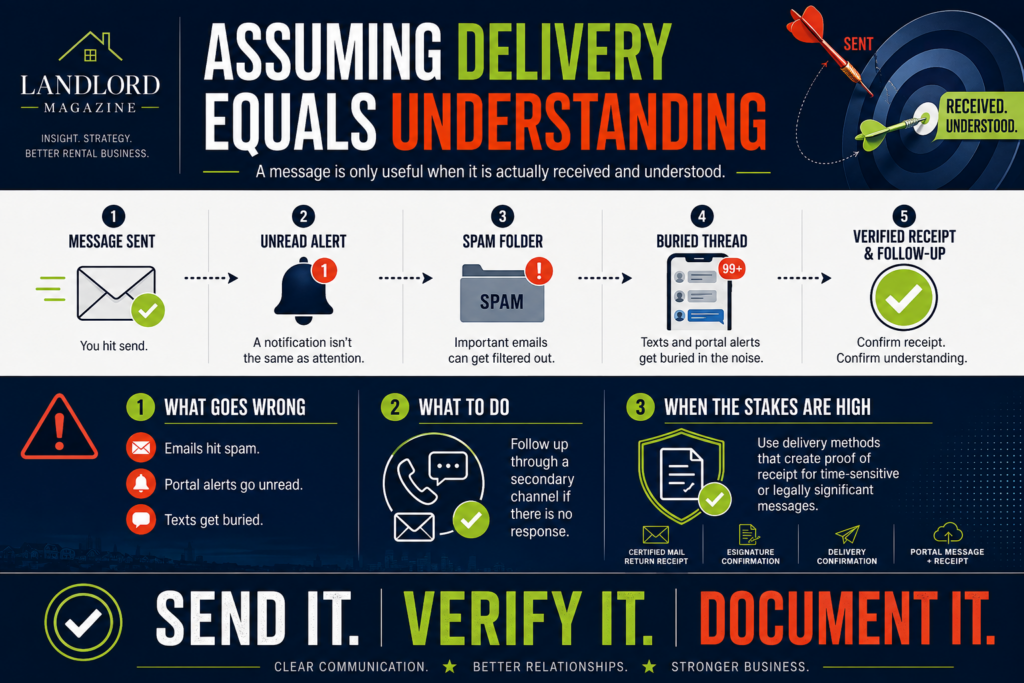
The final mistake is assuming that because you sent a message, the tenant received and understood it. Digital communication fails in both directions more often than landlords expect. Emails land in spam folders. Portal notifications go unread. Text messages get buried under a hundred others.
For any communication that is time-sensitive or legally significant, a single send is not enough. Follow up through a secondary channel if you do not receive a response within a reasonable window. And when the stakes are high enough, such as a formal notice or a lease modification, use a delivery method that generates a confirmation of receipt. The message is only as useful as the proof that it was actually received.