This Content Is Only For Subscribers
A pool can be a major selling point for a rental home in the Greater Houston Area. During a long, hot, humid summer, tenants may see it as one of the property’s best features. For the landlord, however, it also creates serious safety responsibilities and requires consistent maintenance.
Welcome back to Maintenance Matters. In this mid-summer check, we are moving outside. We are focusing on pool safety and the exterior components that protect a rental property from intense sun, heavy rain, wind-driven storms, drainage problems, and moisture intrusion. Grab your clipboard. Exterior maintenance deserves just as much attention as what is happening inside the house.
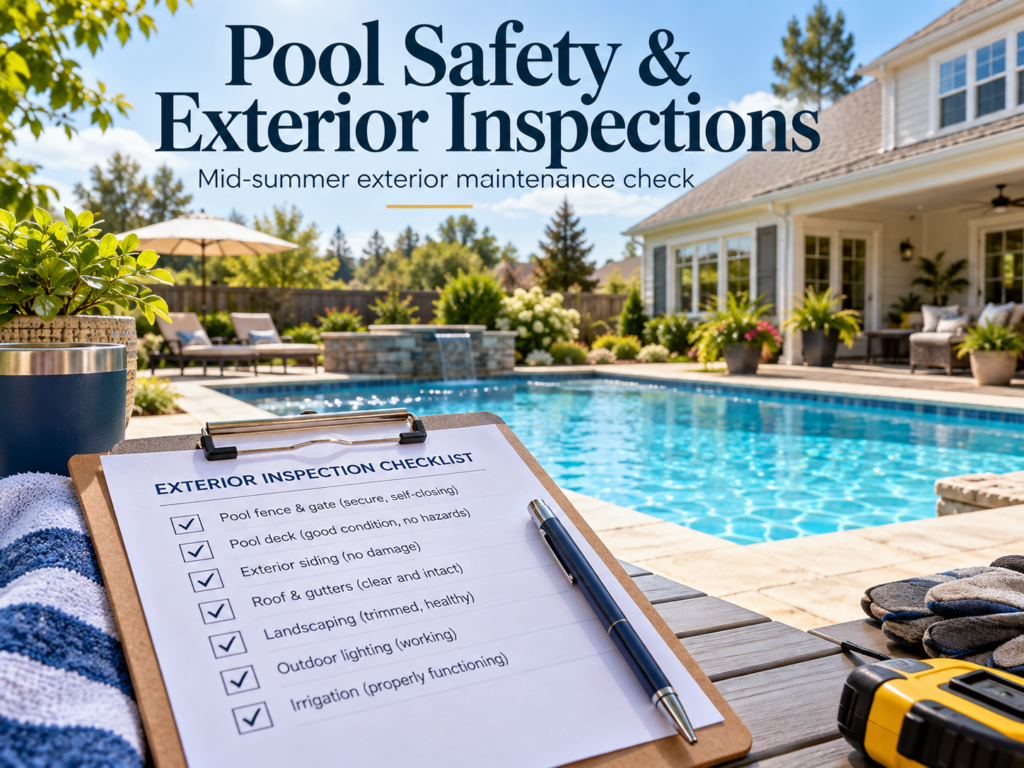
Pool Safety: The Non-Negotiable Perimeter
When it comes to a pool, your first priority is not water clarity. It is access control. Fences, gates, doors, and other barriers help prevent unsupervised entry and should be checked carefully and consistently.
The Fence and Gate Inspection
Walk the entire perimeter of the pool barrier. Greater Houston heat, humidity, soil movement, irrigation, and normal wear can shift posts, loosen hardware, and warp wood. Push and pull on each section to make sure it is secure. Look for gaps beneath or between barriers, and confirm that the fence or barrier complies with the requirements that apply to that specific property, including local rules and any insurance requirements.
The gate is one of the most important components. Open it and make sure it closes and latches reliably without being pushed. Check hinges, latches, and strike plates for wear or misalignment. Height, latch placement, and barrier requirements can vary by jurisdiction and property type, so landlords should confirm the standards that apply to the home rather than relying on one general measurement.
Drain Covers and Electrical Safety
Inside the pool, inspect the main drain covers at the bottom. They must be secure, unbroken, and compliant with the Virginia Graeme Baker Pool and Spa Safety Act. A missing or broken drain cover is an immediate entrapment hazard and requires shutting down the pool until replaced.
Check the pool deck for trip hazards such as cracked concrete, lifting pavers, or uneven surfaces. Heat and soil movement can make small defects more noticeable over time. Watch for slick algae in shaded or poorly drained areas. Also test GFCI protection for applicable exterior electrical outlets and have any failed device or questionable wiring evaluated promptly by a qualified electrician.
The Exterior Envelope: Roof and Siding
Once the pool area is secure, turn your attention to the building envelope. Greater Houston properties take a beating from intense sun, humidity, thunderstorms, high winds, and tropical weather. Damage from spring storms can deteriorate quickly once summer heat and repeated rain set in.
The Roof and Flashing
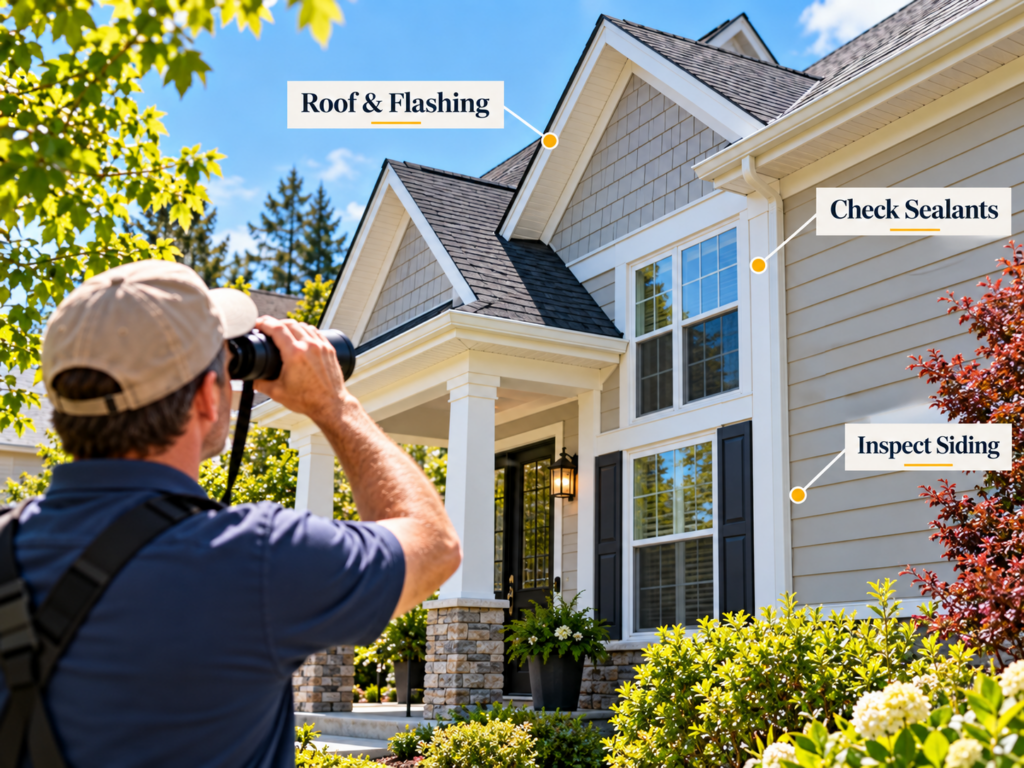
You don’t necessarily need to climb onto the roof, but you do need a clear vantage point. Use binoculars or a drone if necessary. Scan for missing, cracked, or curling shingles.
Pay particular attention to flashing around chimneys, vents, roof penetrations, and valleys. Heat causes building materials to expand and contract, while strong storms can loosen already vulnerable areas. A small opening that looks harmless on a dry day can become a significant leak during the next Houston downpour or period of wind-driven rain.
Siding, Paint, and Sealants
Walk the perimeter of the house and inspect the siding. Look for cracks in brick mortar, rotting wood trim, or peeling paint. Paint isn’t just cosmetic; it’s the protective skin of the wood beneath it. Where paint fails, rot begins.
One of the most important mid-summer exterior tasks is checking caulk and sealants around windows and doors. Strong sun can dry and shrink older sealants, while humidity and rain test weak points. Failed caulk allows conditioned air to escape and gives wind-driven rain a path inside. Replacing it is a relatively low-cost task that can protect the structure and reduce unnecessary cooling loss.
Gutters and Drainage
Greater Houston can move from hot, dry conditions to an intense thunderstorm or tropical downpour very quickly. A property that looks fine during a dry stretch can reveal major drainage problems once several inches of rain arrive in a short period.
Inspect gutters and downspouts to make sure they are secure, clear, and directing water away from the structure. Pay close attention to low spots where water collects near the slab, patios, walkways, or AC equipment. Greater Houston’s heavy rainfall and relatively flat terrain make drainage especially important. Repeated saturation and drying can contribute to soil movement, so keep water moving away from the structure as efficiently as possible.
By checking the pool perimeter and exterior envelope, Greater Houston landlords protect tenants and give the property a better chance of handling the region’s heat, humidity, heavy rain, and summer storms.