This Content Is Only For Subscribers
If your property management strategy relies on your ability to remember to send an email, your system is broken. In the slower months, human memory might seem good enough. But when a Greater Houston summer brings lease expirations, heavy HVAC demand, vacationing tenants, landscaping needs, sudden storms, and drainage or moisture concerns, relying on memory is a direct path to missed deadlines and expensive oversights.
Welcome back to Rental Technology. This month, we are focusing on one of the highest-leverage technological shifts you can make: removing yourself as the bottleneck for routine communication. By automating summer reminders and notifications, you buy back your time and help ensure tenants receive important information when they need it without requiring you to manually send every message.
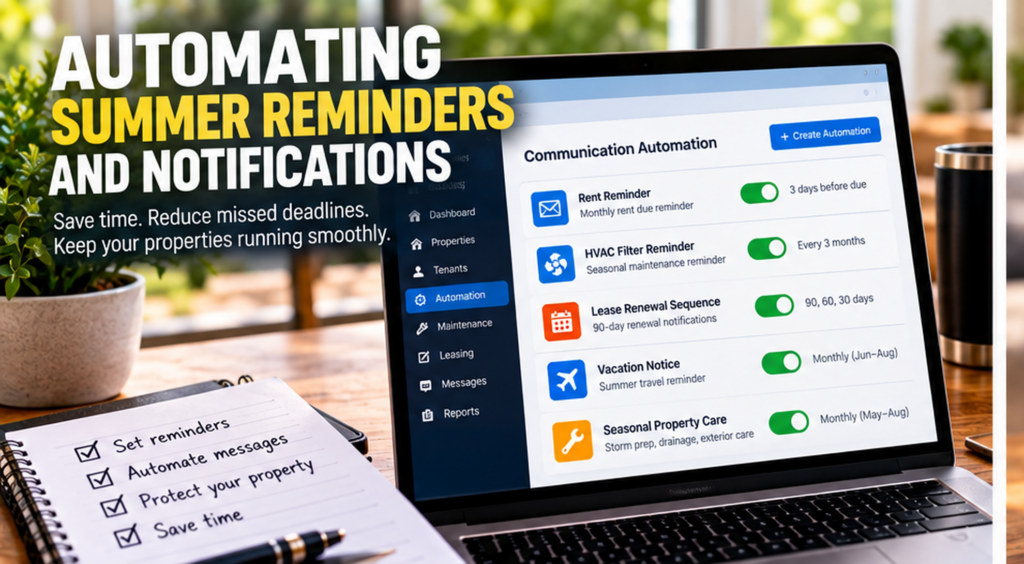
The Case for Automated Communication
A landlord’s job involves a massive amount of repetitive communication. Every month, rent is due. HVAC filters need regular attention. Every summer, leases expire, cooling systems work harder, and outdoor maintenance becomes more demanding.
When you handle this communication manually, you spend mental energy on tasks software can handle reliably. Manual communication is also prone to simple human error. You might forget to send a seasonal reminder about HVAC filters, outdoor drainage, or an upcoming inspection. In Greater Houston, where long stretches of heat and humidity can put extra pressure on cooling systems and moisture control, those missed reminders can become expensive. Automation reduces that risk.
Setting Up the Summer Notification Sequence
Whether you use dedicated property management software like Buildium or a customer communication platform connected to your email, the basic process is the same. You write the message once, set the trigger, and let the software handle the routine delivery.
Here are three automated sequences that can be especially useful for Greater Houston landlords before the summer workload peaks.
1. The HVAC Filter and Property Care Reminder
This is an important asset-protection sequence. In a Greater Houston summer, air conditioners run hard for long stretches, indoor humidity matters, and heavy rain can quickly expose drainage or water-intrusion problems.
Set up a recurring email during the hottest months. Keep it brief and direct. Remind tenants about any filter-changing responsibility stated in the lease, and include seasonal property-care instructions that actually apply to that home. For properties with known drainage areas, condensate concerns, or yard-care responsibilities, make the instructions specific to the property and the lease rather than relying on a one-size-fits-all reminder.
2. The Vacation Protocol Notification
Summer is vacation season. An empty house during a long stretch of heat and humidity can be vulnerable to an unnoticed plumbing leak, HVAC failure, condensate backup, or moisture problem.
Schedule an automated seasonal email outlining your vacation protocol. Ask tenants to notify you when they expect to be away for an extended period if your lease or house rules call for it. Remind them not to shut the cooling system off completely and to follow any property-specific instructions for appliance supply valves, pets, yard care, or emergency contacts. The goal is to avoid discovering a problem days after it started while the tenant is traveling and a Houston storm or cooling failure has affected the property.
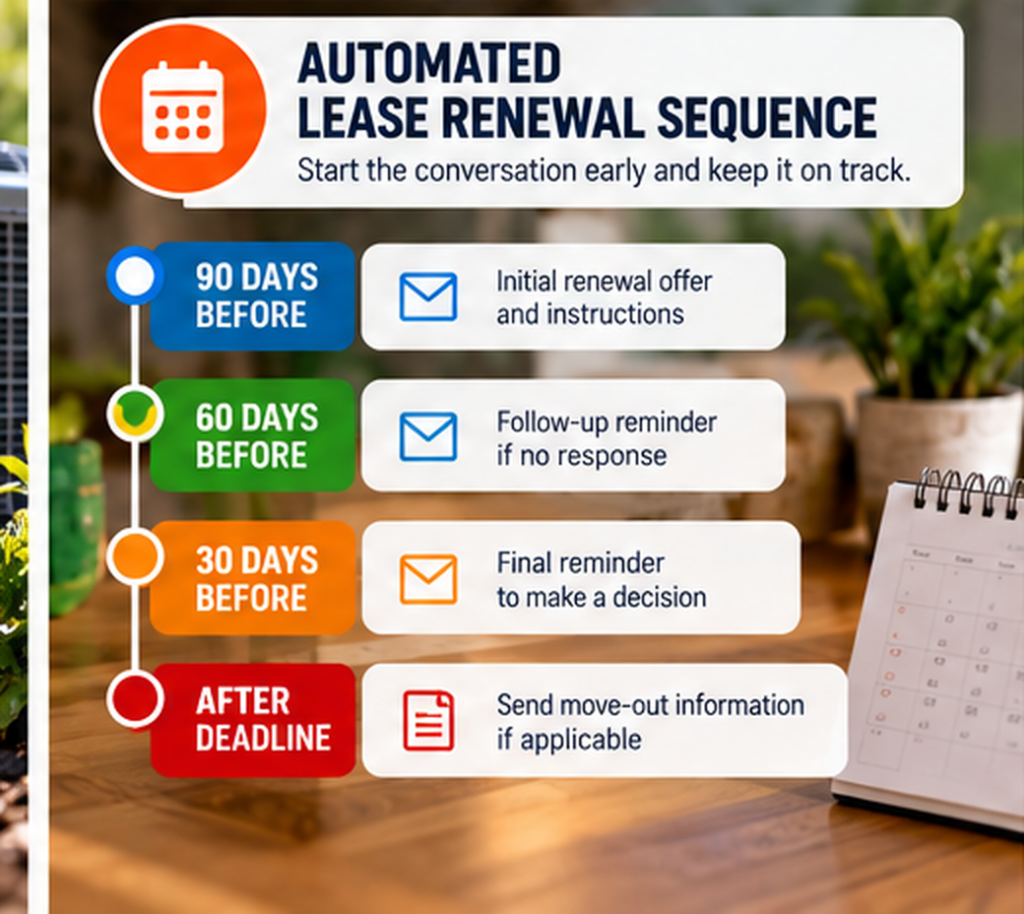
3. The 90-Day Lease Expiration Sequence
Summer is a high-activity turnover season, so landlords cannot afford to scramble for renewal decisions at the last minute.
Your property management software can be configured to trigger a renewal sequence well before a lease expires. A first message can open the renewal conversation and provide a clear response deadline. If the tenant does not respond, the system can send follow-ups at the intervals you choose, followed by move-out information when appropriate. The exact timing should match your lease, your operating process, and any applicable notice requirements.
The Power of SMS Automation
Email is useful for detailed protocols and formal communication, but tenants do not always see it quickly. When you need a tenant to take prompt action, an automated text notification can be more effective.
Many modern platforms offer automated SMS notifications. Use them selectively for genuinely time-sensitive items. For example, you might configure a payment reminder for an outstanding balance or send a brief alert when a vendor appointment has been scheduled. Any payment or late-fee message should match the lease terms and your normal collection process.
Build It Once, Use It Forever
The beauty of automated communication is scalability. It takes time upfront to write the templates and configure the triggers, but once the system is built, it can handle routine reminders in the background while you focus on higher-value work such as renewals, maintenance decisions, and vendor coordination.
Stop relying on sticky notes and scattered calendar alerts to run the busiest months of your business. Automate the routine and let the software carry more of the communication load through the Greater Houston summer.