This Content Is Only For Subscribers
By the time Houston settles into the heart of summer, a landlord’s workload can change almost overnight. Air conditioners are running constantly, kids are out of school, tenants are traveling, turnover picks up, vendors are booked, and every small issue seems to arrive at the same time. Add a stretch of heavy rain or storm cleanup and the calendar gets crowded even faster.
If your phone starts feeling like a second property you have to manage, you are not alone. The problem is usually not that landlords suddenly have impossible tenants. It is that peak season exposes every weakness in the way requests, vendors, move-ins, and communication are organized.
Welcome to Ask a Property Manager. This month, we are dealing with the summer pileup: how to handle more tenant questions and more maintenance pressure without spending every evening answering messages or letting important issues disappear.
You do not need to become available around the clock. You need a system that tells tenants where to go, tells you what needs attention first, and keeps the routine questions from crowding out the real problems.

Why Summer Gets So Busy
Greater Houston has a long, hot, humid summer season. HVAC systems work hard for months, yards and drainage need more attention, families move around school calendars, and a large share of turnover activity lands between late spring and the start of the next school year. Storms can also create a second wave of roof, tree, fence, and water-related calls with very little warning.
That combination creates volume. A new tenant needs utility information, mailbox details, gate access, and help finding the filter. An existing tenant reports that the AC is struggling. Another needs a plumber. A vendor wants to move an appointment. A third tenant is out of town and forgot rent was due.
If all of that comes through personal texts, calls, emails, and handwritten notes, something will get missed. Summer does not create the bad system. It reveals it.
Step 1: Centralize the Communication
The first move is simple: give tenants one primary place for normal communication and maintenance requests.
A property management portal is ideal if you already use one, but a small landlord can also operate with a dedicated business email and phone number. The tool matters less than the rule. Tenants should know exactly where routine requests go, and you should be able to see every open issue without searching five different apps.
Train the system from move-in. If a tenant texts a picture of a dripping faucet, acknowledge it and direct them to the maintenance channel you use. If you solve every text immediately, you teach tenants that the official process is optional.
The exception is an emergency. Tenants should have a clear way to reach you or your emergency contact when the problem cannot wait.
Step 2: Triage Before You React
Ten new messages do not mean you have ten emergencies. They mean you have ten things to sort.
I use three levels. The first is true emergency work that threatens safety or can cause serious property damage. Think active water leaks, major electrical concerns, or a complete cooling failure during dangerous heat. These move immediately.
The second level is urgent but not immediate. A refrigerator failure, a significant plumbing problem, or an AC system that is still cooling but clearly struggling deserves quick scheduling and communication.
The third level is routine. A sticking gate latch, a question about paint, a filter reminder, a loose cabinet hinge, or another small issue may matter, but it does not need to control the next hour of your day.
Once you sort the requests, the panic disappears. Handle the first category, schedule the second, and batch the third.
Step 3: Stop Writing the Same Answer Every Week
Peak season is full of repeat questions. Where do I set up utilities? What size filter does this house use? How do I submit a maintenance request? Where is the mailbox key? What do I do if the thermostat is running but the house is not cooling as expected?
If you have typed the same answer more than a few times, save it. Build a short library of responses that you can personalize in seconds. This is not about sounding robotic. It is about saving your attention for the questions that actually need judgment.
For Greater Houston properties, I keep property-specific notes for utilities, HOA contacts, gate information, trash service, drainage, irrigation, and HVAC filter sizes. A house in an established Houston neighborhood will not always have the same setup as a newer subdivision in Katy, Cypress, or The Woodlands, especially when utility districts and association rules differ from one property to the next.
Step 4: Use the Move-In Message to Prevent the First Wave of Questions
Most move-in questions are predictable. That makes them preventable.
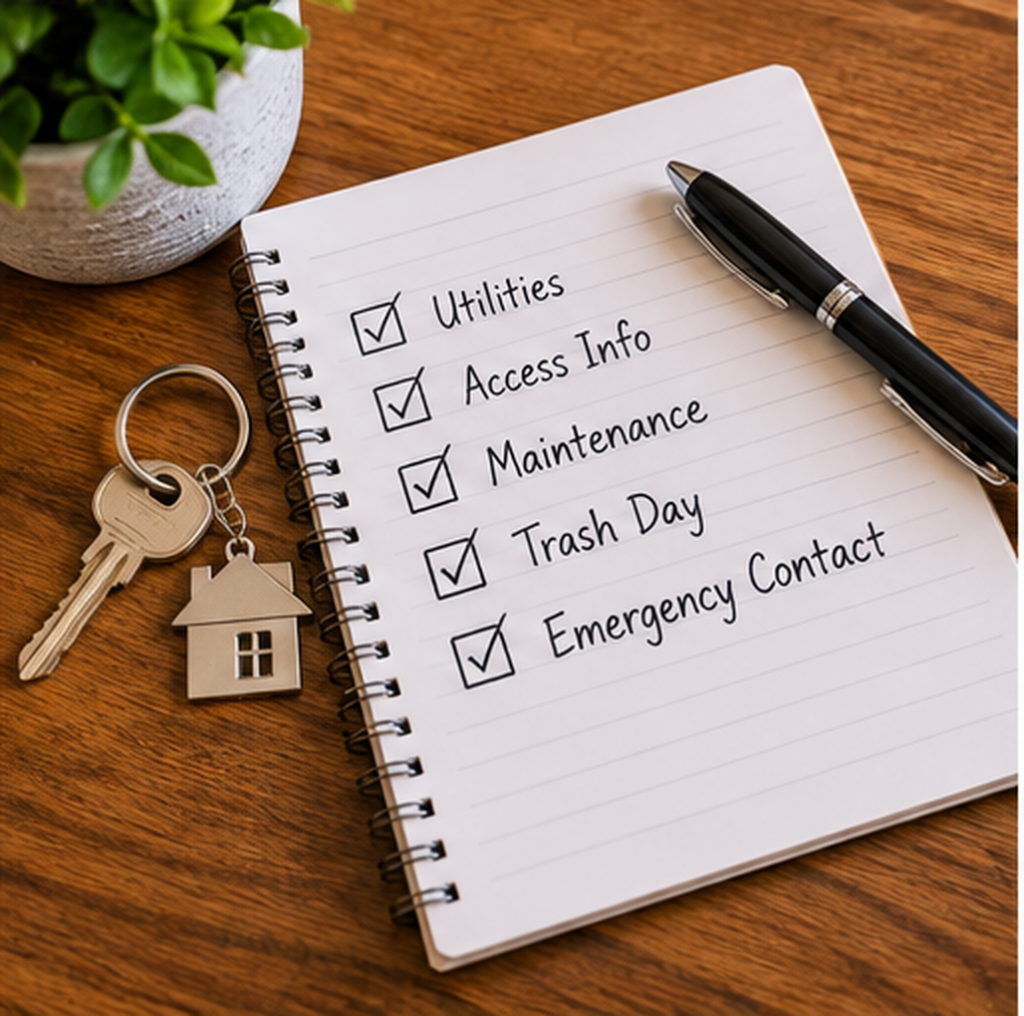
A few days before the tenant gets keys, send one organized message or digital packet with rent instructions, maintenance reporting, utility information, trash day, access details, emergency contacts, and the basic information they need to operate the house.
In summer, I also include a short section on the property itself. That may cover filter changes, thermostat use, irrigation, drainage, and what the tenant should do if the AC stops cooling or heavy rain creates a water concern. For a property farther outside the city, you may also need to cover septic systems, private gates, larger yards, or utility district information.
The point is not to bury the tenant in instructions. It is to answer the first ten questions before move-in day.
Step 5: Be Responsive Without Being Available All Day
One of the easiest ways to burn yourself out is to confuse responsiveness with instant access.
Set business hours and tell tenants when routine messages are reviewed. If a non-emergency question arrives late Saturday night, it can wait until your next normal response window. If you answer every routine message immediately, you train people to expect immediate answers.
Emergencies need a separate process. Make sure tenants know what qualifies, who to contact, and what number or method to use after hours. That boundary protects your time without leaving the property unprotected.
Step 6: Batch the Work
Constant notifications make a landlord feel busy without making the business better. Instead of checking messages every five minutes, process them at set times whenever possible.
I like a morning block and a late-afternoon block. Review new requests, update tenants, schedule vendors, send reminders, and close out completed items. Then get out of the inbox and do the work that actually moves the portfolio forward.
The same idea works with maintenance. If several routine jobs are in the same part of town, schedule them together. A landlord with houses in Katy, Cypress, Spring, and Pearland should not create four separate driving days for four minor repairs.
Step 7: Give Tenants Safe Answers to the Small Stuff
Some tenant questions do not require a service call. They require a clear instruction.
Build a small troubleshooting library for low-risk items: how to replace the HVAC filter, where the water shutoff is located, how to reset the garbage disposal using the manufacturer’s normal reset procedure, what a tripped breaker looks like, and how to submit a useful maintenance photo.
Keep the instructions simple and know where to stop. Tenants should not be doing electrical repairs, opening HVAC equipment, climbing on roofs, or handling anything that creates a safety issue. The goal is to eliminate unnecessary service calls, not turn the tenant into your maintenance technician.
Keep Each Tenant Problem in the Right Lane
Peak season also creates a temptation to treat every tenant issue as part of the same giant summer emergency. Do not do that. A noise complaint, a late rent issue, an HVAC request, and a move-in question may all arrive on the same afternoon, but they belong in different processes.
If a tenant complains about repeated late-night noise, acknowledge it quickly, document what was reported, and handle it through the lease and your normal communication channel. If rent is late, follow the payment process instead of letting a maintenance conversation turn into a payment negotiation. If a tenant is frustrated about a delayed vendor, give them an update rather than letting that frustration spill into every other issue.
Keeping each problem in its own lane matters because summer volume makes it easy to start improvising. The more stressed you get, the more valuable your normal process becomes. A tenant should get the same basic response in July that they would get in February, even if your calendar is twice as full.
Build the Vendor Bench Before Everybody Is Busy
A good tenant communication system will not help much if you have nobody available to perform the work. By July, the reliable HVAC technician, plumber, handyman, and appliance vendor you like may already be booked.
I try to know my backup options before the first major heat wave. Keep current contact information for at least a primary and secondary vendor in the trades that can create urgent summer problems. If you manage houses from Katy to Humble, The Woodlands to Pearland, or across several counties, pay attention to where each vendor is willing to travel. A contractor who is great in central Houston may not want a routine call on the other side of the metro.
Also make your work orders useful. Send the property address, tenant contact, problem description, photos when available, access instructions, and any relevant equipment information in one message. Vendors move faster when they do not have to call you three times to figure out what they are walking into.
Track the Properties That Create Repeat Summer Work
By the end of a busy summer, you should know which houses consumed your time. Maybe one property generated repeated HVAC calls. Another had constant drainage or irrigation issues. Another produced three complaints because the tenant did not understand the HOA trash or parking rules.
Write that down. Those patterns should shape the next turnover, inspection, and budget. If the same air conditioner struggles every August, you may need more than another service call. If tenants keep asking where a shutoff is located, add it to the move-in packet. If a property routinely creates landscaping complaints, rethink who handles the yard.
The goal is to make next summer easier than this one. Every recurring problem you identify is a chance to remove one future phone call from the calendar.
Build the Summer System Before You Need It
Peak summer does not have to mean nonstop reaction. Centralize communication, sort requests by urgency, save the answers you repeat, send better move-in information, set boundaries, batch the work, and give tenants safe resources for the simple questions.
That system will not eliminate broken AC units, late vendors, or tenant complaints. It will keep every one of those problems from arriving as a separate emergency.
The best summer setup is not the one that makes you look busy. It is the one that lets you see what matters, respond in the right order, and still put the phone down at the end of the day.